Suburban Showdown, War Powers Clash, FTC Flexes
We break down New Jersey’s special election, the latest Senate vote on Iran war powers, Pakistan’s push to restart talks, China’s 5 percent growth, and new FTC moves on noncompetes and ad-tech. Hear how the right and the left are reading each story.
Episode Infographic
Show Notes
Welcome to Right versus Left News—your daily briefing on the stories that matter, told from both sides of the aisle. I'm your AI host - Chris, and each day I bring you the most important political and cultural news, with perspectives from conservative and progressive voices. No spin, no agenda—just the facts and the opinions that shape our national conversation. Let's dive in...
Here’s the quick rundown of today’s five stories...
New Jersey voters in the 11th District are choosing a new member of Congress in a closely watched special election. In Washington, the Senate rejected—again—an effort to curb President Trump’s war powers on Iran. Diplomacy kept moving, though... Pakistan’s army chief is in Tehran, pushing for renewed talks between the US and Iran. Abroad, China reported 5 percent first quarter growth—a data point with real implications for US markets and policy. And at home, the Federal Trade Commission rolled out two actions—one targeting noncompete agreements and another taking on alleged collusion in digital advertising brand safety. According to the Associated Press and the FTC, those are today’s headlines.
[BEGINNING_SPONSORS]
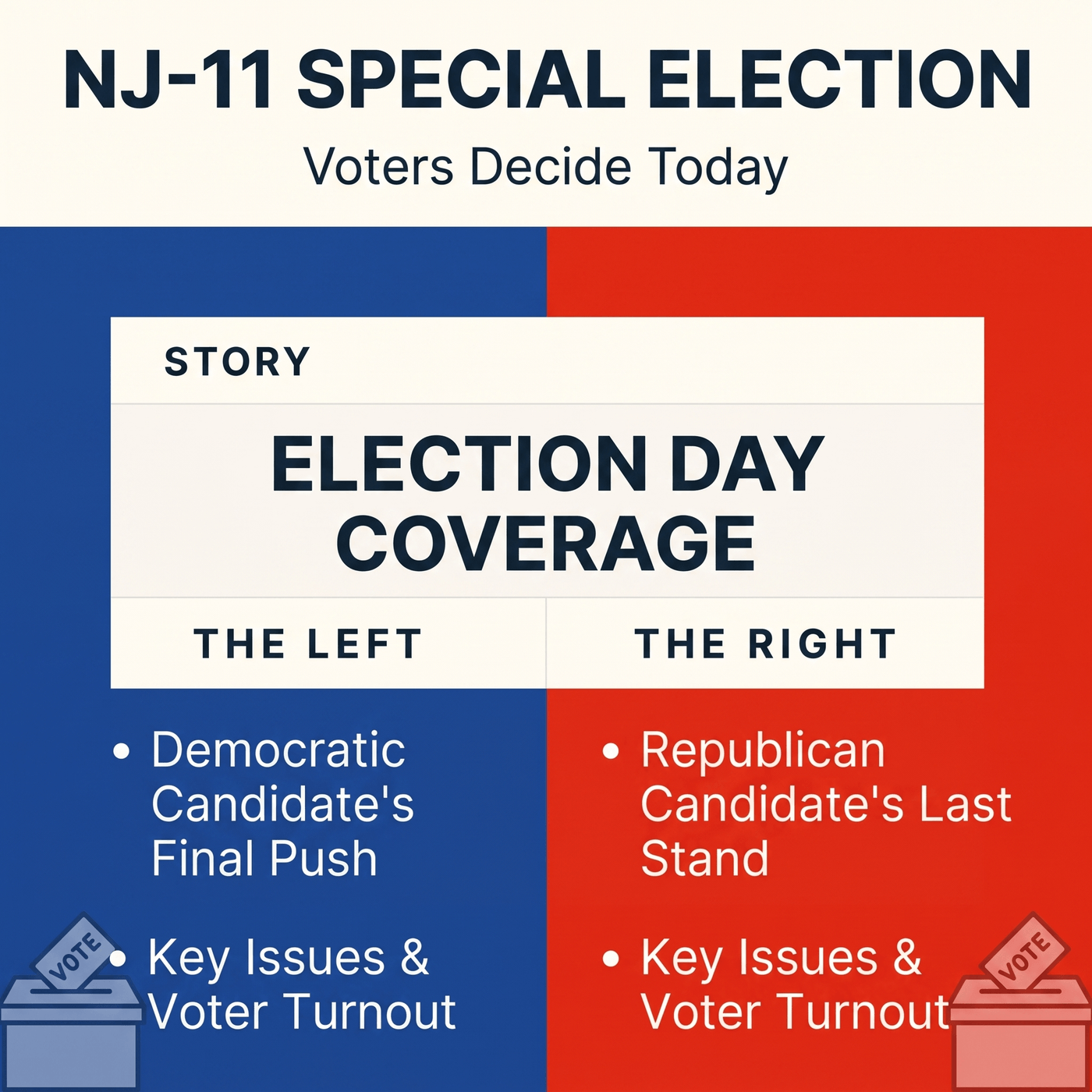
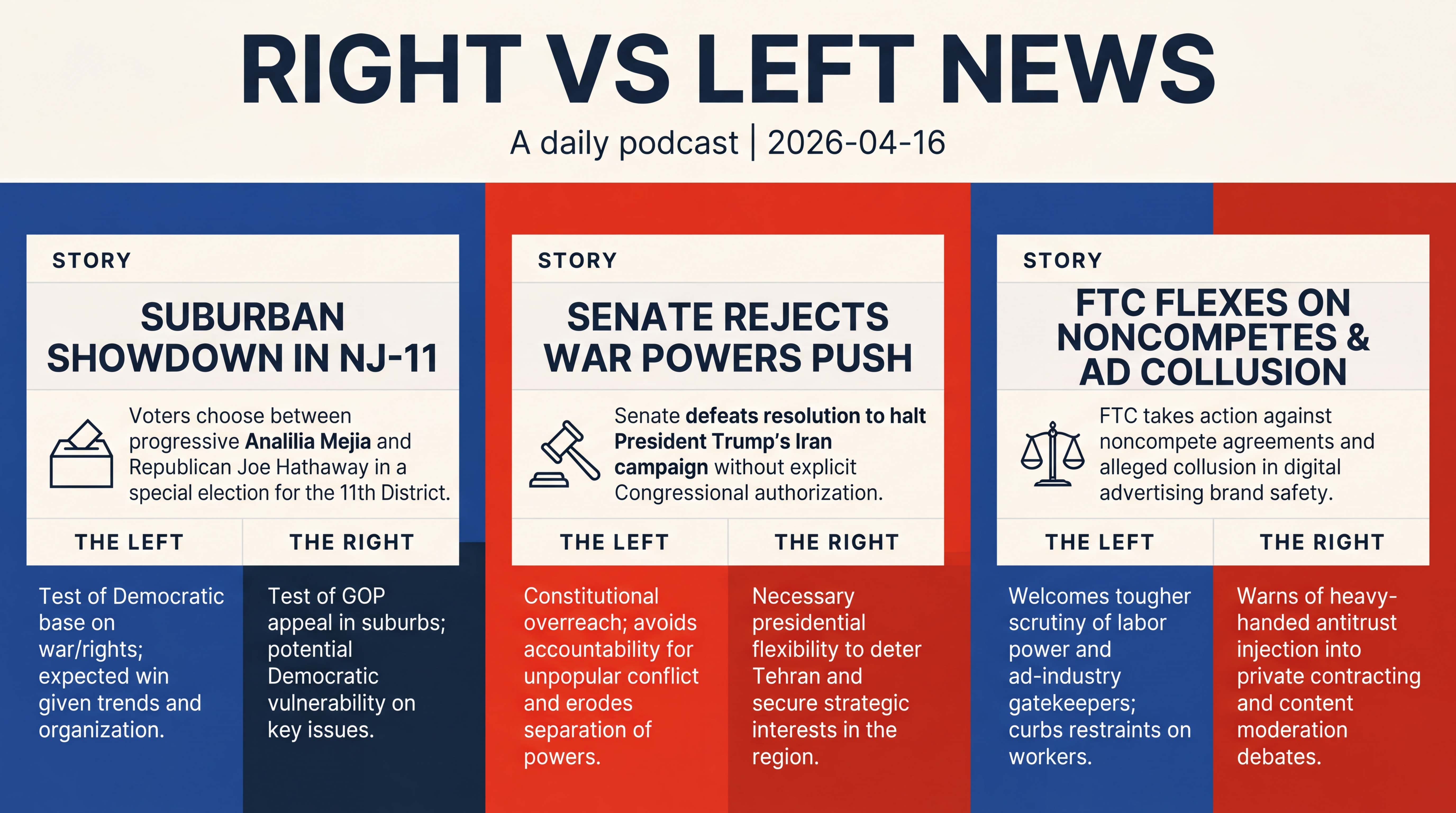
Voters in New Jersey’s 11th Congressional District are at the polls today—April 16—to fill the US House seat vacated by now Governor Mikie Sherrill. Democrat Analilia Mejia, a progressive organizer and former Labor Department official, faces Republican Joe Hathaway, the mayor of Randolph Township. The district has trended blue in recent years but remains competitive... and early votes were strong heading into today. The winner will serve the remainder of the 119th Congress.
On the right... many see this as a test of GOP appeal in well-educated suburbs heading into the midterms. If Republicans keep it close—or even win—it could signal Democratic vulnerability on costs, crime, and schools. Some also argue national Democrats are overconfident in districts that flipped during Trump’s first term and could flip back if 2026 becomes a referendum on inflation and executive overreach.
On the left... the view is that NJ-11 is Democrats’ to lose, given recent trends and strong organization in Essex and Morris counties. A Mejia win would bolster the case that backlash to the Iran war—and worries about reproductive rights and democracy—are energizing the Democratic base, even in upscale suburbs that once leaned Republican.
In the Senate, Republicans again defeated a Democratic resolution to halt President Trump’s military campaign in Iran unless Congress explicitly authorizes it. Democrats say they will keep forcing votes as the conflict persists—Republican leaders counter that the president needs flexibility to achieve war aims. This follows several similar attempts in both chambers.
On the right... critics say the War Powers push is a constitutional overreach that would tie commanders’ hands, especially as US and allied forces try to deter Tehran and secure the Strait of Hormuz.
On the left... the emphasis is on Congress’s constitutional role, and the political risk for Republicans in sustaining an unpopular conflict. Progressives argue repeated GOP blockades avoid accountability on strategy, costs, and the endgame—while continued strikes without authorization erode separation of powers.
Pakistan’s army chief traveled to Tehran today to meet Iranian officials and try to restart talks between the US and Iran after nearly seven weeks of war. The shuttle diplomacy aims to preserve a fragile lull and explore a second round of negotiations... even as battlefield dynamics remain volatile.
On the right... analysts caution that Tehran often uses negotiations to buy time, and say any mediator must press Iran on missiles and regional militias. They argue diplomatic overtures should be paired with steady pressure to secure US objectives and prevent a re-escalation in the Gulf.
On the left... many welcome third-party diplomacy, arguing that sustained talks—backed by robust IAEA verification—offer the best path to end the war and avoid wider regional spillover. There are continued concerns about transparency on war aims, and a push for rigorous nuclear checks in any deal.
[MIDPOINT_SPONSORS]
China’s statistics bureau reported year over year GDP growth of 5 percent in the first quarter—modestly above many forecasts. Quarter on quarter growth came in at 1.3 percent. Economists say Beijing has weathered the immediate war-related shocks so far, but pressures could build if energy prices stay high or global demand cools. US policymakers are watching for implications on supply chains, prices, and the Fed’s outlook.
On the right... commentators warn that headline growth can mask structural issues in China’s property sector and debt. They argue the US should double down on reshoring and strategic decoupling, and note that stronger Chinese exports amid conflict underscore the need for tougher trade policy and vigilance on critical technologies.
On the left... analysts see the data as a reminder that global growth—and the US consumer—are still linked to China’s factory floor. They highlight risks from Middle East energy volatility and argue for diplomacy to stabilize oil markets, plus domestic investments that reduce US exposure to imported shocks... rather than reflexive tariffs that can boomerang on prices.
The Federal Trade Commission announced two actions. First, it ordered one of the nation’s largest pest-control companies to stop enforcing noncompete agreements and sent warning letters to other employers—part of a broader effort to limit restraints on worker mobility. Second, in a separate case, the FTC announced a proposed order resolving allegations that several major ad agencies colluded through industry groups to impose uniform brand safety standards that effectively demonetized certain publishers; the agencies agreed to stop the conduct. Both moves came from the FTC’s Bureau of Competition.
On the right... critics warn that Washington is injecting heavy-handed antitrust into private contracting and content moderation debates. Expect arguments that limiting noncompetes could curb training investments, and that the ad-tech action risks politicizing brand safety tools businesses use to protect their reputations and ad dollars.
On the left... supporters welcome tougher scrutiny of labor-market power and ad-industry gatekeepers. They argue curbing noncompetes boosts wages and entrepreneurship, while cracking down on coordinated brand safety floors can protect smaller and independent publishers—and the broader marketplace of ideas—from opaque blacklists.
That's it for today's episode of Right versus Left News. Remember, understanding both sides isn't about picking a team—it's about being informed. Subscribe wherever you get your podcasts, and join us tomorrow for another balanced look at the day's biggest stories. Until next time, stay curious and stay informed.
