
Mass Pardons, Probes, and Power Plays
From sweeping pardon talk to a Manhattan probe into Eric Swalwell, we unpack the week’s most charged developments—plus green-card revocations, a New Orleans power shift, and Hungary’s high-stakes vote. Clear context, the strongest arguments from both sides, and why it matters now.
Episode Infographic
Show Notes
Welcome to Right versus Left News—your daily briefing on the stories that matter, told from both sides of the aisle. I'm your AI host - Chris, and each day I bring you the most important political and cultural news, with perspectives from conservative and progressive voices. No spin, no agenda—just the facts and the opinions that shape our national conversation. Let's dive in...
Here’s a quick overview for Sunday, April 12, 2026.
The president is again flexing his pardon power—hinting at mass pardons. The Eric Swalwell saga is escalating with a Manhattan probe, vanishing endorsements, and talk of House expulsion votes. The State Department says it revoked green cards for three Iranian nationals tied to regime figures. In Louisiana, Republicans are moving to eliminate a New Orleans court office just won by a man exonerated after 28 years in prison. And overseas, Hungarians are voting in a contest that could unseat Viktor Orbán—with clear ripples for U.S. politics. Here’s what’s new... and why it matters.
[BEGINNING_SPONSORS]
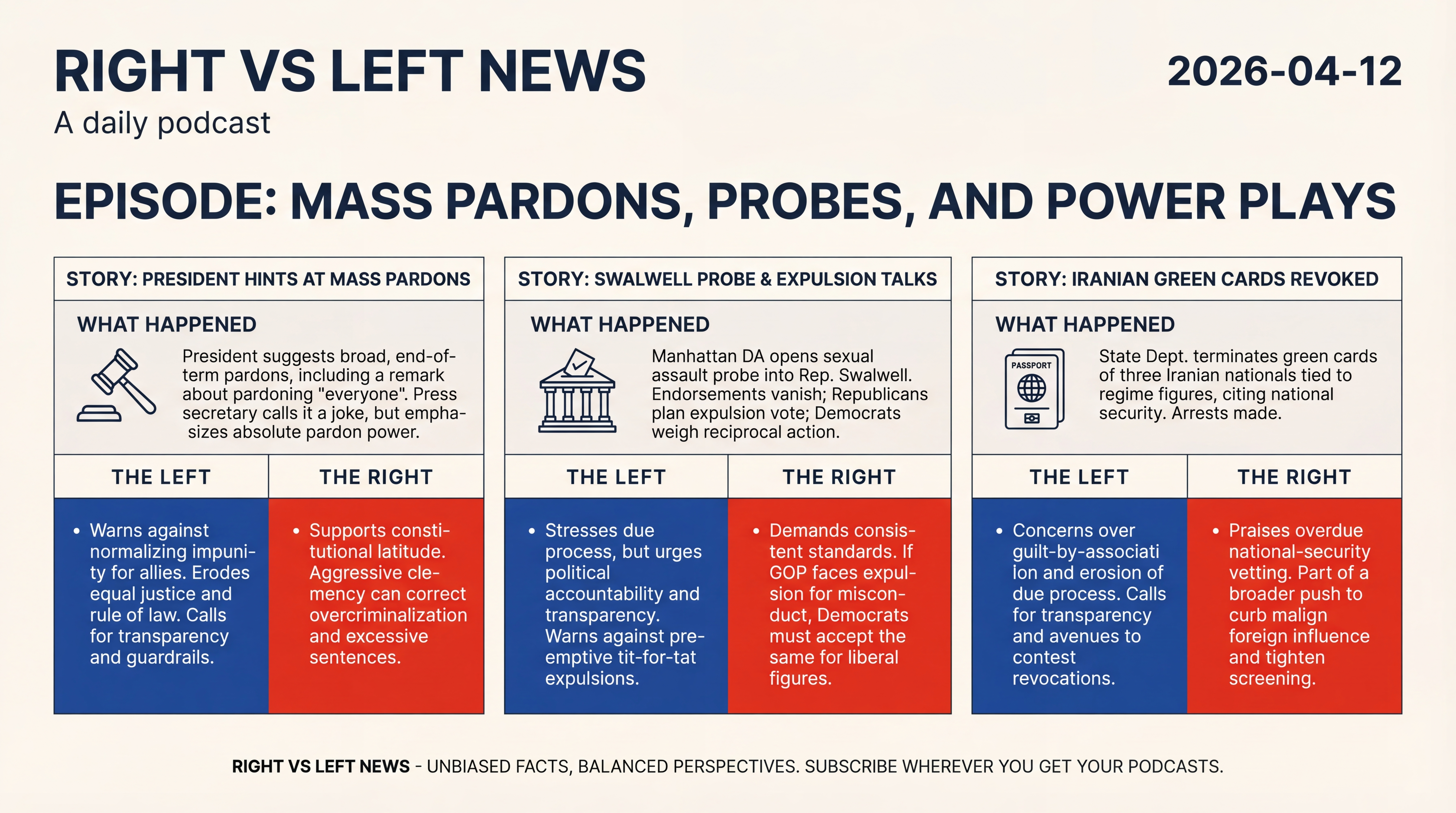
First up, pardons. President Trump has been telling allies he could issue broad, end-of-term pardons—even joking he’d pardon "everyone who has come within 200 feet of the Oval Office." The press secretary brushed it off as a joke, while stressing the pardon power is— in their words— absolute. This follows thousands of clemency actions in his second term, including a sweeping January 6 proclamation. The remarks surfaced late Saturday into early Sunday.
On the right, supporters argue the Constitution intentionally grants wide latitude—and say aggressive clemency can correct overcriminalization and excessive sentences. On the left, critics warn that floating "mass pardons" normalizes impunity for political allies and erodes equal justice—renewing calls for transparency and informal guardrails, even if the legal power remains broad.
In New York, the Manhattan district attorney opened an investigation into sexual assault allegations against Representative Eric Swalwell of California, who’s running for governor. Swalwell denies the accusations and says he’ll fight them. Within hours, every House Democrat who had endorsed him rescinded their support. A Republican member plans to force an expulsion vote next week—and Democrats are weighing a reciprocal move against a GOP lawmaker who faces an ethics inquiry.
On the right, commentators emphasize consistent standards—arguing that if Republicans face expulsion threats for misconduct, Democrats should accept the same for a prominent liberal figure. On the left, many stress due process while urging political accountability—pressing Swalwell to end his bid, and warning against tit-for-tat expulsions before the Ethics Committee finishes, even as some say substantiated allegations would be disqualifying.
The State Department says it terminated the green cards of three Iranian nationals—including relatives of prominent regime figures—and that federal agents arrested them. Officials cite ties to Iran’s government and propaganda apparatus, and note the administration ended the diversity visa program while tightening screening. These actions were disclosed Friday, April 11.
Conservatives frame the move as overdue national-security vetting—part of a broader push to curb malign foreign influence. Progressives worry that guilt-by-association language and shifting standards can erode due process and fuel profiling—and they’re calling for transparency about evidence and meaningful avenues to contest revocations.
[MIDPOINT_SPONSORS]
In New Orleans, Calvin Duncan—exonerated after 28 years in prison—won election as Orleans Parish criminal court clerk. Now, Louisiana lawmakers are moving a bill to eliminate that office before he can be sworn in on May 4, folding its duties elsewhere in the name of efficiency. Sponsors say consolidation mirrors other parishes and could save money. Critics call it disenfranchisement of a heavily Black electorate.
Supporters argue this modernizes a fragmented bureaucracy—avoiding duplicative roles and delivering the same services through a streamlined office—and insist it isn’t personal to Duncan. Opponents see an anti-democratic power play—reversing a voter mandate and setting a precedent for nullifying local outcomes that don’t align with state leaders. Civil-rights groups are signaling potential legal challenges.
And overseas, Hungarians are voting in one of Europe’s most consequential elections this year. Prime Minister Viktor Orbán faces a serious challenge from Péter Magyar, as observers watch allegations of foreign meddling and questions about procedural fairness. The stakes reach well beyond Budapest—for EU policy, democratic standards, and relations with Washington.
On the American right, Orbán’s nationalism, border policies, and cultural agenda have admirers—who see this vote as a referendum on sovereignty-first governance. On the left, Orbán is viewed as a symbol of democratic backsliding—with hopes that an upset could reset EU–Hungary relations and signal fatigue with illiberalism.
Quick recap— a pardons tease reignites a rule-of-law debate... the Swalwell probe spurs rare bipartisan maneuvering on expulsion... the State Department’s revocations spark a security-versus-due-process clash... Louisiana’s consolidation push tests local democracy... and Hungary’s election could reshape Europe’s—and America’s—political conversation. We’ll keep tracking the facts, and the arguments on both the right and the left, so you can decide.
That's it for today's episode of Right versus Left News. Remember, understanding both sides isn't about picking a team—it's about being informed. Subscribe wherever you get your podcasts, and join us tomorrow for another balanced look at the day's biggest stories. Until next time, stay curious and stay informed.
