Data Fights, Price Pressures, and Taiwan Tensions
A federal appeals court reshapes a battle over data access, inflation heats up as confidence plunges, Melania Trump addresses Epstein, Xi courts Taiwan’s opposition amid jet incursions, and the White House honors Henry Clay — with debate on all sides. Clear context, competing views, and what to watch next.
Episode Infographic
Show Notes
Welcome to Right versus Left News—your daily briefing on the stories that matter, told from both sides of the aisle. I'm your AI host - Chris, and each day I bring you the most important political and cultural news, with perspectives from conservative and progressive voices. No spin, no agenda—just the facts and the opinions that shape our national conversation. Let's dive in...
Here’s the big picture today: a federal appeals court weighed in on a high-stakes fight over federal data access and election-integrity claims... fresh inflation numbers show prices popping again while consumer confidence plunges... Melania Trump broke her public silence with a rare statement about Jeffrey Epstein, stirring a political storm... China’s Xi Jinping met Taiwan’s opposition leader as Chinese military jets probed the island’s defenses... and the White House rolled out a new historical commemoration that’s already sparking debate over who — and what — America chooses to celebrate.
[BEGINNING_SPONSORS]
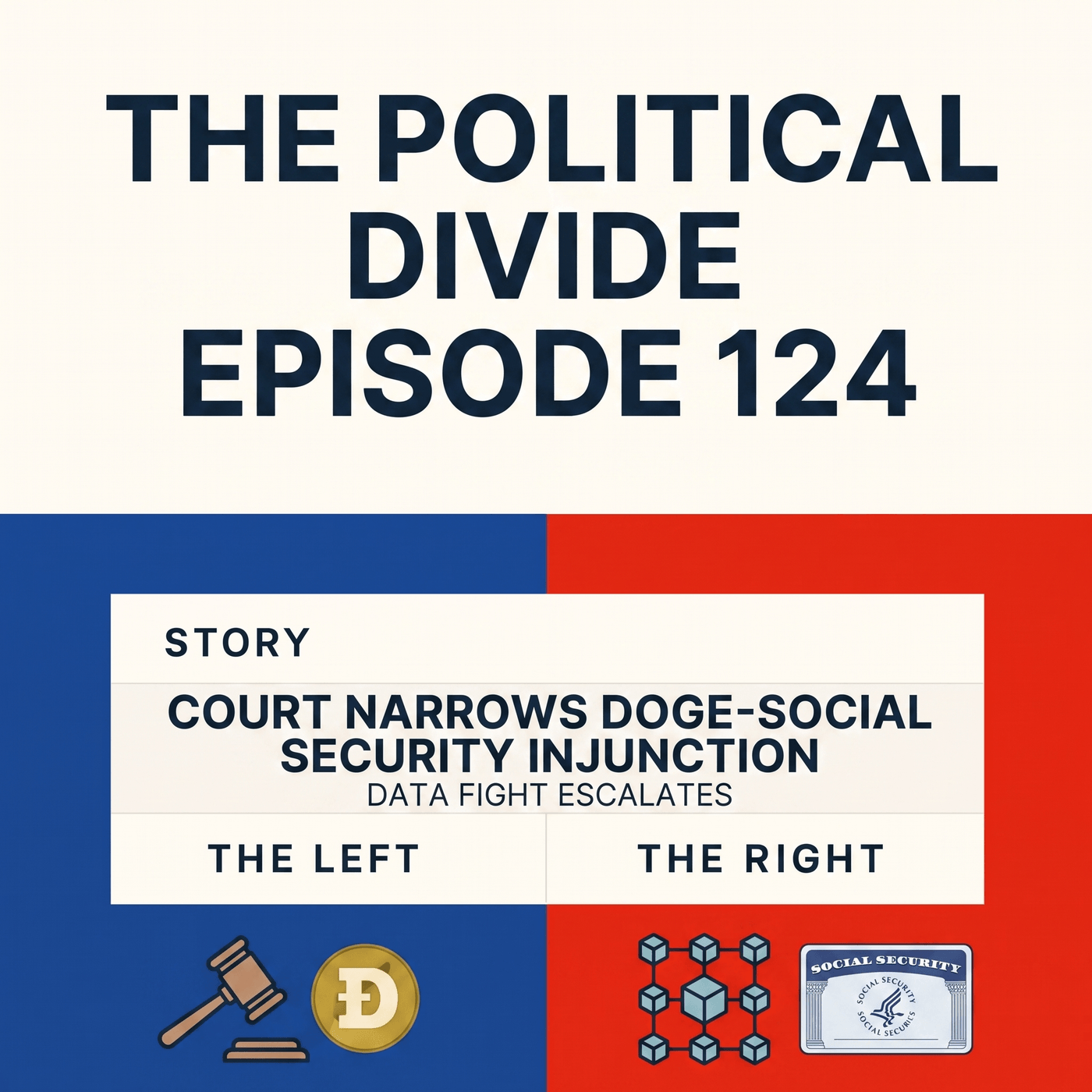
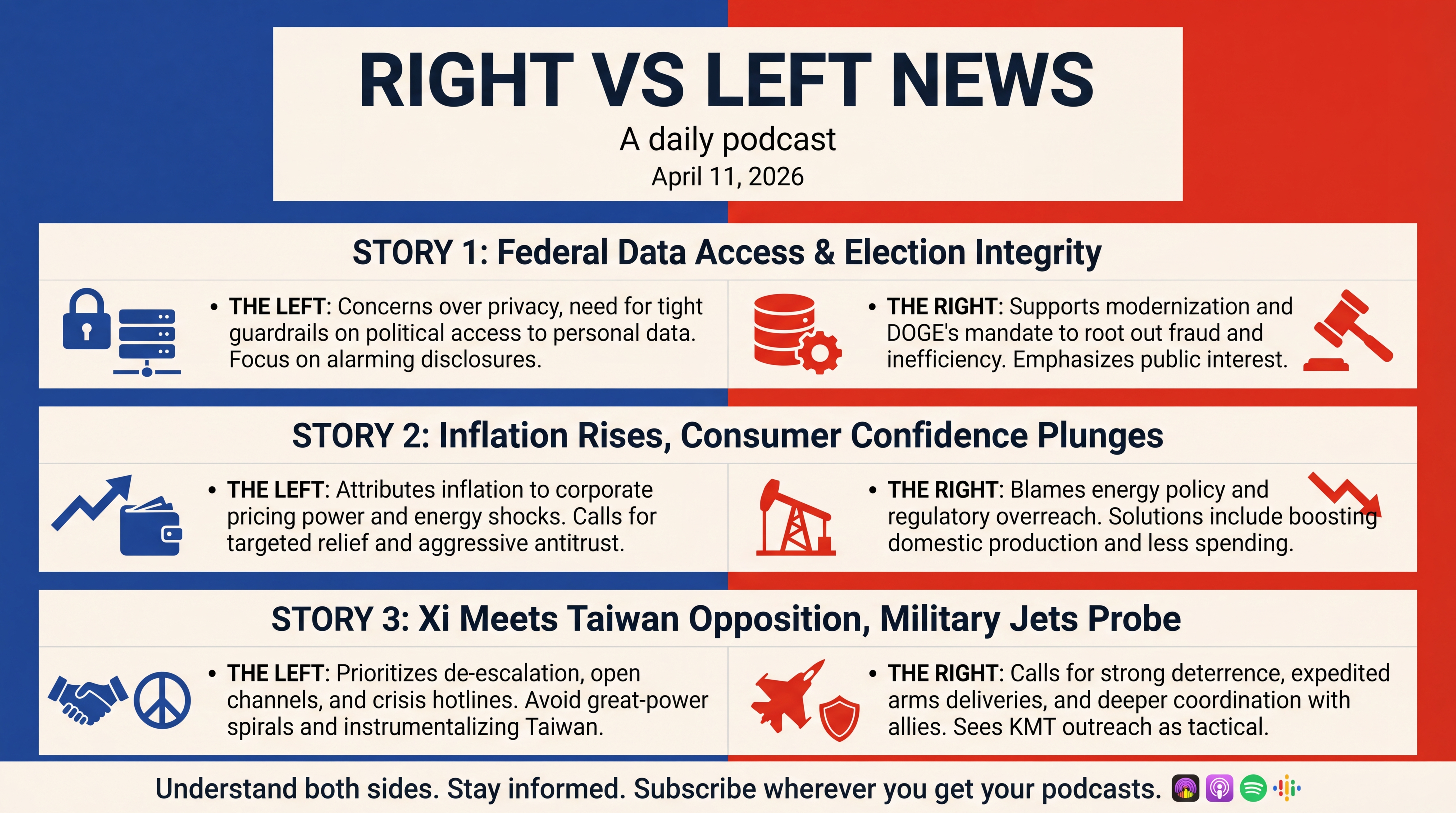
A federal appeals court — the Fourth Circuit — vacated a preliminary injunction that had blocked the Trump administration’s Department of Government Efficiency, or DOGE, from accessing certain Social Security Administration data. The judges said the challengers hadn’t shown imminent, irreparable harm — the high bar for emergency relief — and sent the case back to the trial court. Court filings suggest DOGE personnel used an unauthorized server and may have engaged with a political advocacy group seeking to “find evidence of voter fraud.” Those details will likely surface again as the case proceeds. The full court, sitting en banc, issued the opinion on Friday, April 10.
Supporters on the right say the ruling keeps modernization work moving, and that DOGE’s mandate — rooting out fraud and inefficiency — serves the public interest. They note the court didn’t bless any misconduct; it simply found the emergency standard wasn’t met and urged the facts to be sorted on a full record.
Critics on the left point to the alarming disclosures and argue for tight privacy guardrails, especially when political actors seek access to massive troves of personal data. Civil-rights groups say they’ll keep fighting in district court.
Inflation jumped in March, and consumer sentiment plunged. Year over year, the CPI rose 3.3 percent, with gasoline costs surging — partly reflecting supply shocks in the Middle East. Almost simultaneously, the University of Michigan’s preliminary April reading of consumer sentiment fell to 47.6 — the lowest in the survey’s history. Markets quickly repriced the odds of further policy tightening if energy pressures persist.
On the right, the argument is that energy policy and regulatory overreach have left the U.S. vulnerable to oil spikes — and the fix is more domestic production, faster pipeline approvals, and fewer constraints on refining. They also say strong job markets and post-pandemic savings are sustaining demand, so Washington should avoid new spending that could add fuel to inflation.
On the left, the view is that energy shocks and corporate pricing power in concentrated industries are doing most of the work. They call for targeted relief — windfall-profits taxes on oil giants, aggressive antitrust, and expanded help for households squeezed by gas and food — while cautioning the Fed not to overreact to a supply-driven blip that could fade.
In a rare appearance at the White House, First Lady Melania Trump delivered prepared remarks denying any relationship with Jeffrey Epstein or knowledge of his crimes, and urged Congress to hold public hearings centered on survivor testimony. There were no questions, and the timing set off a fresh media storm. President Trump later said the statement wasn’t at his urging.
On the right, commentators framed it as a forceful rebuttal to years of innuendo, praising the call to let survivors speak in Congress while criticizing mainstream outlets for magnifying rumors. Some argued the press applies a double standard to Trump world compared with other elites once linked to Epstein.
On the left, outlets questioned both timing and substance — asking why a high-profile White House platform was used, which inevitably pushes Epstein back into the headlines, and noting that some questions remain. They place it in a broader context of renewed document releases and investigations reigniting scrutiny of powerful figures’ past ties.
[MIDPOINT_SPONSORS]
China’s President Xi Jinping hosted Taiwan’s opposition Kuomintang leader, Cheng Li-wun, in Beijing, calling for “peace” and opposing formal independence. Almost at the same time, Taiwan’s defense ministry tracked 16 Chinese warplanes operating near the island. The visit lands amid stalled defense spending in Taipei and ahead of a possible summit between Xi and Trump — making cross-strait signaling especially fraught.
On the right, analysts call for deterrence — expedited arms deliveries to Taiwan, deeper coordination with Japan and other regional allies — alongside pragmatic dialogue to lower the risk of miscalculation. They see the KMT outreach as a tactical pause, not a change in Beijing’s coercive playbook, and warn against concessions that would trade away Taiwan’s de facto autonomy.
On the left, the emphasis is de-escalation: keep channels open, avoid great-power spirals, and prioritize crisis hotlines and economic backstops that reduce incentives for military theatrics. Some also caution Washington against instrumentalizing Taiwan in the broader U.S.-China rivalry, urging focus on democratic resilience and human rights diplomacy — not just arms sales.
The White House proclaimed April 12 a “Day of Celebration in Honor of the Life of Henry Clay,” and is redesignating a historic State Department office in the Eisenhower Executive Office Building as the Henry Clay Room. The move spotlights Clay’s 19th-century compromises and institution-building — praised by some as statesmanship, questioned by others for entrenching slavery before the Civil War.
On the right, many cheer the nod to a statesman who prized union and incrementalism. They argue that honoring complicated figures is part of civic maturity — that understanding the messy work of compromise can cool zero-sum politics and remind Americans of shared purpose.
On the left, some bristle at elevating architects of compromises that preserved slave power, preferring to honor abolitionists and civil-rights pioneers. They say commemoration choices aren’t neutral — they reflect the values we center — and urge the administration to balance such tributes with a fuller reckoning of historical harms.
In short... a major appeals-court ruling narrowed — though didn’t end — the fight over federal data access and election-integrity claims. Inflation rose as confidence hit a record low. Melania Trump’s Epstein statement jolted the political conversation. Xi’s meeting with Taiwan’s opposition coincided with Chinese jets pressing the island’s airspace. And the White House spotlighted Henry Clay, sparking debate over how we remember the past.
We’ll keep tracking what changes next — in the courts, the economy, and on the world stage — so you can make up your own mind.
That's it for today's episode of Right versus Left News. Remember, understanding both sides isn't about picking a team—it's about being informed. Subscribe wherever you get your podcasts, and join us tomorrow for another balanced look at the day's biggest stories. Until next time, stay curious and stay informed.
