Ballots, Barrels, Battlefronts, and a Big Tech Reckoning
A rapid rundown of the Supreme Court’s mail-ballot showdown, oil’s pullback on Iran talk, Russia’s mass drone strike in Ukraine, a landmark Meta verdict, and the U.N.’s Hormuz debate. What shifted, why it matters, and what to watch next.
Episode Infographic
Show Notes
Welcome to Right versus Left News—your daily briefing on the stories that matter, told from both sides of the aisle. I'm your AI host - Chris, and each day I bring you the most important political and cultural news, with perspectives from conservative and progressive voices. No spin, no agenda—just the facts and the opinions that shape our national conversation. Let's dive in...
It’s Wednesday, March 25, 2026... Here’s what moved fast over the last 24 hours.
The Supreme Court heard a case that could change how millions vote by mail. Oil prices slid on talk of possible U.S.-Iran negotiations. Russia launched one of its biggest drone and missile waves of the year against Ukraine. A New Mexico jury found Meta liable for harming kids. And at the U.N., a push to authorize all necessary means to keep the Strait of Hormuz open is drawing pushback. Let’s unpack it...
[BEGINNING_SPONSORS]
First up, the Supreme Court heard arguments on whether states can count mail ballots that arrive after Election Day—if they were postmarked on time. Several justices—especially on the conservative side—sounded skeptical of those grace periods. They exist in 14 states and Washington, D.C. A decision is expected by late June—early enough to shape the 2026 midterms.
Election officials warn that a sudden change could confuse voters who’ve relied on those deadlines for years, and postal delays have already made timely postmarks less predictable.
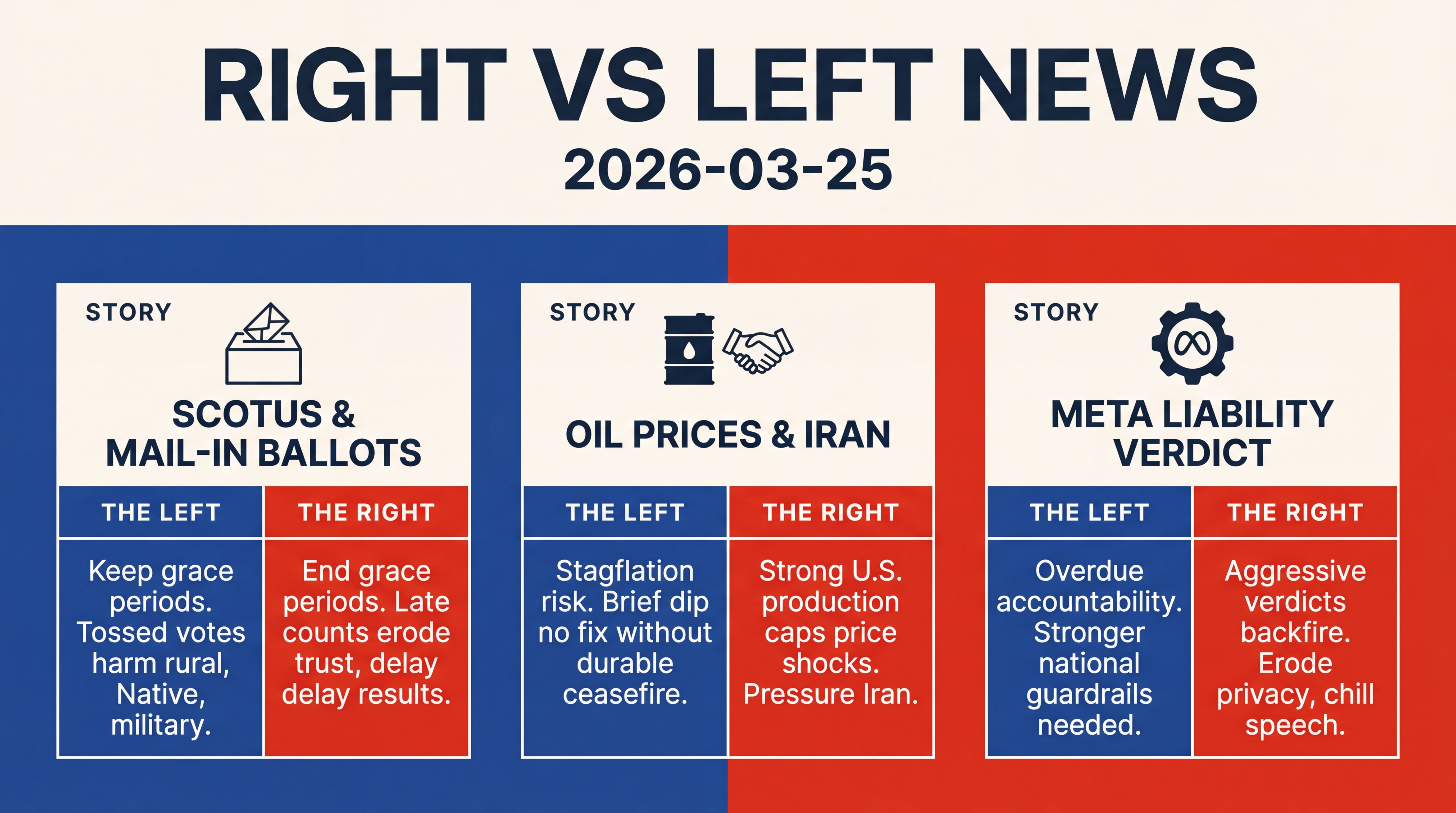
On the right, election integrity advocates want the Court to require ballots to be received—not just postmarked—by Election Day, arguing that late counts erode trust and delay results. They say a clear national standard would reduce suspicion and lawsuits.
On the left, voting-rights groups warn that ending grace periods could toss valid votes from rural communities, Native voters, and military families—people who can’t control mail delays. Their bottom line: keep grace periods, expand ballot tracking, and add secure drop boxes to protect access and confidence.
Next, oil prices fell more than 4 percent overnight as Asian markets digested talk of possible U.S.-Iran negotiations and a reported American ceasefire proposal. Traders see at least some chance of de-escalation, so crude pulled back from recent spikes—even as Tehran publicly dismissed direct talks.
On the right, the case is that strong U.S. production—and a drill-more stance—can cap price shocks, with coordinated use of emergency reserves helping steady sentiment. The message: keep pressure on Iran, but use American energy muscle to shield consumers.
On the left, coverage emphasizes broader risks—stagflation worries if oil whipsaws again, and warnings about the danger of a prolonged disruption in Hormuz. Translation: a brief price dip doesn’t end the economic threat without a durable ceasefire.
In Ukraine, Russia launched one of its largest overnight attacks of the year—nearly 400 drones and multiple missiles—killing at least six and injuring dozens. Strikes hit cities from Kyiv to Lviv. Officials say Moscow appears to be probing for a breakthrough as a spring ground push looms. The air assault spilled into daylight, including hits on residential areas.
On the right, the choice is framed as stark: surge weapons and air defenses to blunt Russia’s offensive—or accept pressure for talks from a position of weakness. Some analysts also warn Washington not to let attention to Iran crowd out support for Kyiv’s immediate needs.
On the left, many back continued aid but press for a clearer endgame and stronger diplomacy to avoid a grinding forever war—especially with global crises stacking up. Media critics add that leaders should level with the public on costs and strategy.
[MIDPOINT_SPONSORS]
In New Mexico, a Santa Fe jury found Meta liable under state law, concluding the company knowingly harmed children’s mental health and concealed what it knew about child sexual exploitation on its platforms. It’s a landmark verdict that could ripple through other cases and test the limits of tech firms’ defenses under Section 230 and the First Amendment.
On the right, libertarian and conservative critics caution that aggressive verdicts and age-verification mandates could backfire—eroding privacy, chilling speech, and burdening smaller platforms more than the giants. They argue recent age-gating pushes are policy band-aids that may create new risks while failing to address root problems.
On the left, many progressives and child-safety advocates see overdue accountability—validating state-level pushback after years of internal research about harms to teens. Investigators documented solicitations by posing as minors, and supporters say the verdict adds momentum for stronger national guardrails.
At the U.N., Bahrain is pushing a Security Council resolution urging nations to use all necessary means to keep the Strait of Hormuz open—language that could imply U.N.-backed force against Iran. Several members object that it risks green-lighting a wider war, even as energy flows remain vulnerable and markets stay on edge.
On the right, hawks emphasize that freedom of navigation is non-negotiable. Allies signal support for a coalition approach, and some argue a credible threat of force is sometimes needed to deter further maritime attacks.
On the left, critics highlight the risk that militarizing Hormuz could spiral—arguing for de-escalation, maritime insurance backstops, and targeted diplomacy rather than broad force authorizations. Trade experts warn that prolonged disruption would raise global energy and food costs, with outsized harm to poorer nations.
Quick recap... The Supreme Court’s mail-ballot case could reset 2026 voting rules. Oil eased on ceasefire chatter, even as risks persist. Russia pummeled Ukraine in a sprawling drone assault. A New Mexico jury dealt Big Tech a major legal blow. And at the U.N., a hard-edged bid to secure Hormuz met resistance.
We’ll keep tracking what shifts next—and what it means for your vote, your wallet, and the wider world.
That's it for today's episode of Right versus Left News. Remember, understanding both sides isn't about picking a team—it's about being informed. Subscribe wherever you get your podcasts, and join us tomorrow for another balanced look at the day's biggest stories. Until next time, stay curious and stay informed.
