War Powers Clash, World Cup Risks, OPEC Jitters, Android Backlash
A fast, balanced rundown: Congress’s War Powers push after strikes in Iran, Mexico’s World Cup security assurances amid cartel violence, OPEC+ jitters and the SPR, backlash to Google’s Android developer ID rule, and Ukraine’s shifting peace calendar as the Middle East heats up. Plus, how the right and left are framing each story.
Episode Infographic
Show Notes
Welcome to Right versus Left News—your daily briefing on the stories that matter, told from both sides of the aisle. I'm your AI host - Chris, and each day I bring you the most important political and cultural news, with perspectives from conservative and progressive voices. No spin, no agenda—just the facts and the opinions that shape our national conversation. Let's dive in...
Here’s what we’re watching this Sunday, March 1, 2026.
Congress is moving quickly to assert its authority over war and peace after yesterday’s strikes in Iran... Mexico’s president and FIFA insist World Cup matches will proceed safely despite cartel violence... oil markets brace for a key OPEC+ check-in as Washington signals it won’t tap the Strategic Petroleum Reserve... Google’s new Android developer ID rule faces pushback from privacy groups... and Ukraine says the timetable for peace talks could shift as the Middle East heats up. Let’s dig in.
[BEGINNING_SPONSORS]
Let’s start with Congress and the War Powers push.
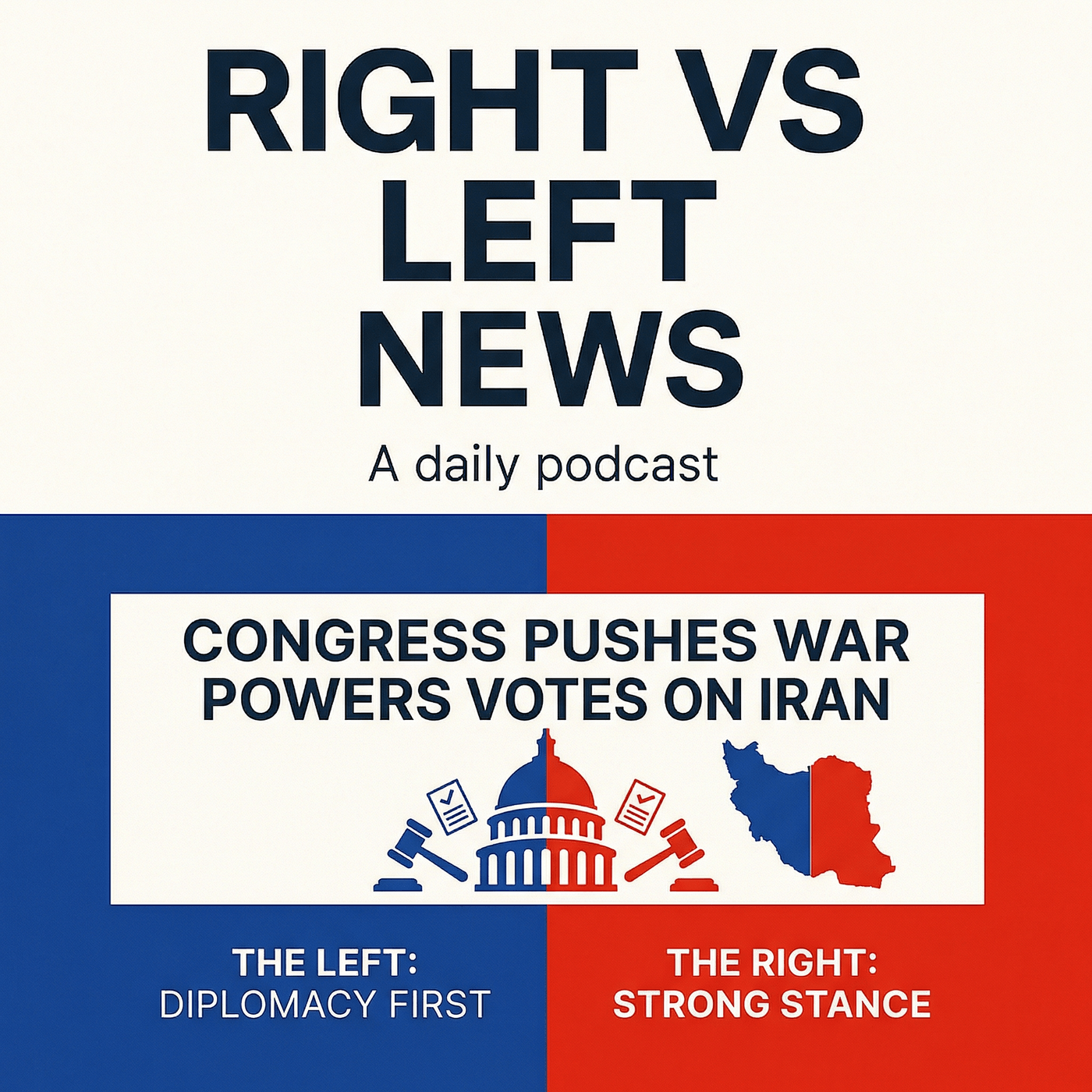
Top Democrats are calling for immediate votes on resolutions to limit further U.S. military action against Iran after President Trump’s strikes. Some Republicans who emphasize congressional prerogatives — like Rand Paul and Thomas Massie — say they’re open to the debate, while GOP leaders who back the strikes are noncommittal about reconvening today. Votes could land in the days ahead... but history suggests these measures rarely survive a presidential veto.
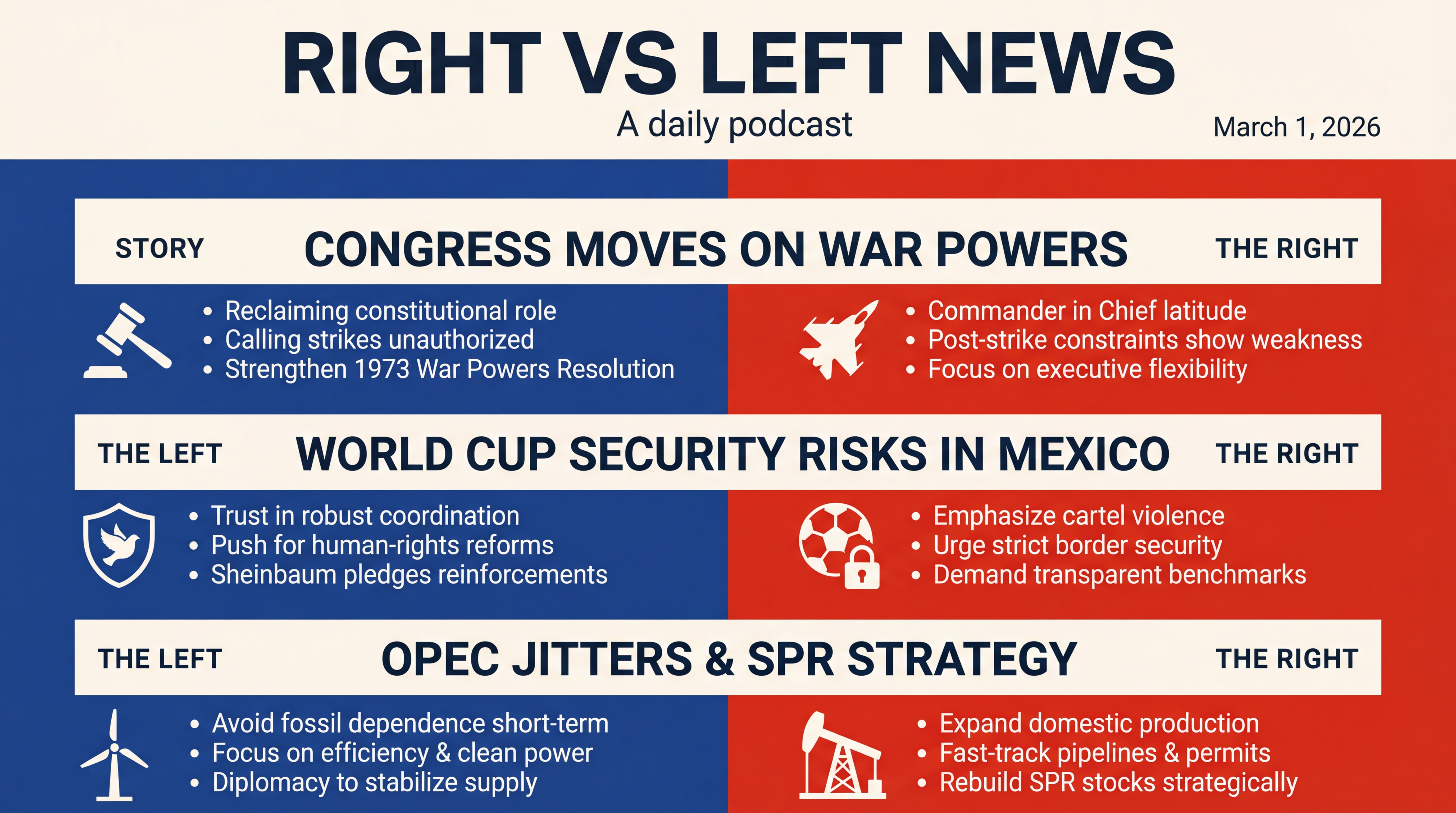
On the right, many argue the Commander in Chief needs latitude for rapid action — and that post hoc constraints can telegraph indecision to adversaries. Expect a constitutional debate over the War Powers Resolution, with an emphasis on executive flexibility and deterrence.
On the left, progressives frame this as Congress reclaiming its constitutional role. They call the strikes unauthorized and want to give the 1973 law real teeth — especially after multiple episodes of unilateral action in recent years. Some leaders are also fast-tracking measures aimed at restraining further action.
Next up — Mexico, the World Cup, and security.
After a week of violence tied to the reported killing of cartel leader El Mencho, FIFA President Gianni Infantino told Mexico’s President Claudia Sheinbaum he has full confidence in Mexico’s ability to safely host 2026 matches. FIFA will send a delegation to review logistics and mobility. The assurances arrive as World Aquatics pulled an event near Guadalajara and some national teams monitor conditions — so it’s a mix of reassurance and lingering caution.
On the right, coverage emphasizes the scale and brutality of cartel violence and urges contingency plans, stricter border security, and transparent benchmarks before marquee events proceed. Reports of mass graves near a World Cup venue have fueled those calls.
On the left, progressive and international outlets stress that major events can proceed with robust coordination — while pressing for human-rights and rule-of-law reforms. Sheinbaum has pledged to reinforce security and mobility, even as officials acknowledge real risks.
Now — oil, OPEC+, and the SPR.
OPEC+ ministers are meeting as markets digest the geopolitical shock. The cartel had already signaled it would keep options open, with a check-in set for March 1. Meanwhile, the U.S. is not planning to release oil from the Strategic Petroleum Reserve right now — betting that any price spike can be managed, and that OPEC+ can help stabilize supply if needed. Analysts warn that even partial disruptions near the Strait of Hormuz could push crude toward triple digits.
On the right, you’ll hear calls to expand domestic production, fast-track permits and pipelines, and rebuild SPR stocks strategically — arguing energy security starts at home and that over-reliance on OPEC+ is a policy risk.
On the left, center-left and progressive analysts caution against short-term fixes that lock in fossil dependence. They make the case for efficiency, clean-power build-out, and targeted relief for households if prices surge — while engaging producers diplomatically to keep barrels flowing in the near term.
[MIDPOINT_SPONSORS]
Now to Google’s Android policy controversy.
More than 40 privacy and open-internet groups — including Proton, Tor, and the Electronic Frontier Foundation — are urging Google to reverse a new Android policy that requires developers to register with government-issued IDs, even if they distribute apps outside the Play Store. They argue the change undermines anonymity for dissidents and concentrates gatekeeper power. Google says the move improves security.
On the right, many conservatives who distrust Big Tech’s reach see this as another centralizing move — one that could chill innovation and empower corporate censors. They argue Congress should scrutinize platform-level ID mandates and ensure competitors — and sideloading — remain viable options.
On the left, civil-liberties groups warn that ID-tied app distribution can endanger activists and whistleblowers and risks entrenching platform control. They’re calling for rules around deepfakes and political manipulation — but with privacy safeguards, transparency about takedowns, and real interoperability.
Finally — Ukraine peace talks, now linked to the Middle East timetable.
Officials in Kyiv say the timing and venue of the next round of talks with Russia and the U.S. could shift depending on developments in the Middle East. President Zelenskyy has warned against any pause that lets Moscow regroup — a point he’s repeated in recent interviews. Conservative analysis has raised skepticism about quick EU accession promises and highlighted hard trade-offs embedded in proposed cease-fire frameworks.
On the right, opinion is split. Some argue for hard-nosed, enforceable guarantees and doubt the Kremlin’s good faith. Others push for a rapid freeze to reduce U.S. risk exposure — paired with pressure on Europe to fund long-term reconstruction and security frameworks.
On the left, center-left voices emphasize that any deal must come with credible security guarantees, stable financing, and accountability for war crimes — warning that a paper peace without enforcement could snap back into conflict and undermine democratic norms.
That’s the rundown for today.
Congress’s War Powers push, Mexico’s World Cup assurances, oil-market jitters around OPEC+ and the SPR, pushback to Google’s Android developer ID rule, and Ukraine’s peace calendar colliding with Middle East volatility. We’ll keep tracking these fast-moving stories... and how the right and the left are framing them.
That's it for today's episode of Right versus Left News. Remember, understanding both sides isn't about picking a team—it's about being informed. Subscribe wherever you get your podcasts, and join us tomorrow for another balanced look at the day's biggest stories. Until next time, stay curious and stay informed.
