Shutdowns, Arctic Pushback, Navalny, Taiwan, and Campus Strife
Five fast-moving stories: a partial DHS shutdown, European pushback over Greenland, a toxicology bombshell in Navalny’s death, Beijing–Taipei tensions, and a Stanford protest mistrial. Hear the latest facts — and how both sides are framing them.
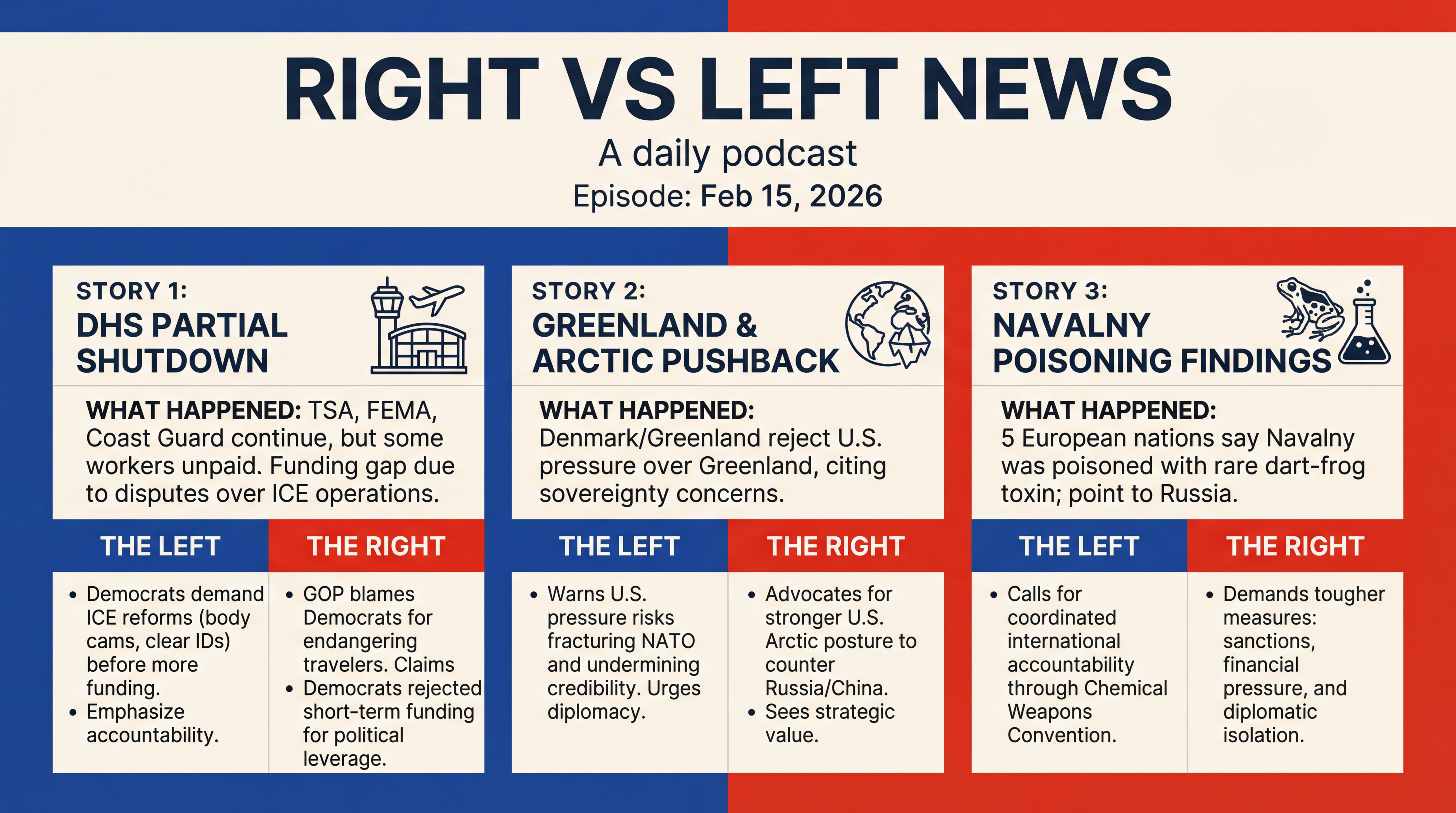
Episode Infographic
Show Notes
Welcome to Right versus Left News—your daily briefing on the stories that matter, told from both sides of the aisle. I'm your AI host - Chris, and each day I bring you the most important political and cultural news, with perspectives from conservative and progressive voices. No spin, no agenda—just the facts and the opinions that shape our national conversation. Let's dive in...
Today we’re following five fast-moving stories.
First — a partial Department of Homeland Security shutdown is rippling through airports and emergency services, with both parties trading blame.
Second — at the Munich Security Conference, Denmark and Greenland push back hard on U.S. pressure over Greenland... an Arctic flashpoint that’s stirring alliance nerves.
Third — a major revelation: five European governments say Alexei Navalny was poisoned with a rare dart-frog toxin, pointing the finger at Russia.
Fourth — China’s top diplomat warns Washington over Taiwan, even as Taipei urges lawmakers to approve a big defense package.
And fifth — in California, a jury deadlocks in the Stanford protest case, reigniting national arguments about protest, property damage, and free speech.
According to reporting from MarketWatch, Barron’s, and the Washington Post on the shutdown... the Guardian on Munich... the U.K. government and AP on Navalny... Asharq Al-Awsat, Reuters, and the Straits Times on Taiwan... and AP and the Stanford Daily on the mistrial — here’s what we know.
[BEGINNING_SPONSORS]
Let’s start with the DHS shutdown.
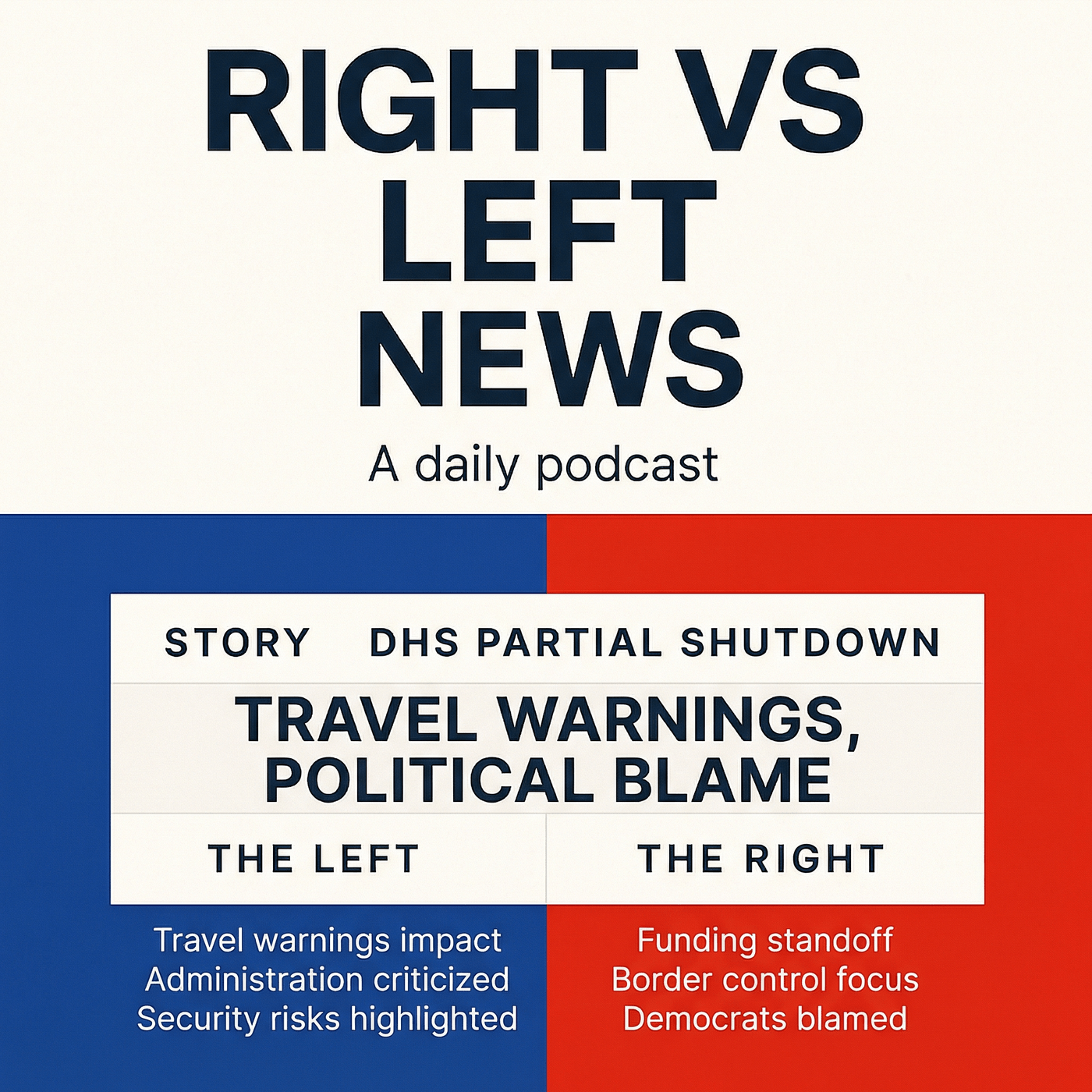
A partial DHS shutdown began over Presidents Day weekend after the Senate failed to pass a full-year funding bill. TSA, FEMA, and the Coast Guard are continuing essential operations — but many workers may go unpaid. TSA is warning about longer lines and potential delays. Reports outline likely passenger impacts — from longer security lines to staffing strain. The funding gap stems from disputes over proposed limits on ICE operations following fatal incidents in Minneapolis.
From the right... some conservative outlets frame the partial shutdown as a Democratic choice that endangers travelers — arguing Democrats rejected short-term funding to force ICE policy changes and should take responsibility for any airport chaos. They highlight GOP claims that the White House made concessions and that Democrats are digging in for political leverage.
From the left... outlets emphasize Democrats’ position that reforms — body cameras, clearer identification, limits on sensitive-location arrests — are necessary before backing more ICE money, especially since ICE and Border Patrol remain funded from earlier legislation. Democrats cast this as accountability, not defunding, and point to risks of continuing what they call heavy-handed enforcement.
Next — Munich, and a pushback over Greenland.
At the Munich Security Conference, Danish Prime Minister Mette Frederiksen said U.S. pressure on Greenland is totally unacceptable, and Greenland’s leaders echoed sovereignty concerns. The pushback reflects wider European unease about American ambitions in the Arctic — strategic chokepoints, missile lanes, and rare-earth access are all in the mix.
From the right... some commentators argue the U.S. needs a dramatically stronger Arctic posture — even exploring novel arrangements for Greenland — to counter Russia and China. A hard U.S. bid, they say, would enhance Western security.
From the left... editorial voices warn the episode risks fracturing NATO and undermining U.S. credibility on sovereignty. Even floating coercive ideas toward a NATO partner, they caution, could be catastrophic for the alliance and for U.S. standing.
On Navalny’s death — a new finding.
In a joint announcement timed to Munich, the U.K., France, Germany, Sweden, and the Netherlands said tests of samples from Alexei Navalny’s body found epibatidine — a rare toxin derived from South American dart frogs — and called it highly likely the cause of death, attributing responsibility to the Russian state. The U.K. posted a formal statement and is taking the case to the chemical-weapons watchdog, and major outlets corroborated key details.
From the right... coverage notes a pattern of Kremlin poisonings and says the finding strengthens the case for tougher measures — sanctions, financial pressure, and diplomatic isolation — warning that appeasement only invites more aggression.
From the left... others press for coordinated accountability through international law — arguing the evidence should trigger consequences under the Chemical Weapons Convention and inform broader policy on Ukraine and human-rights sanctions.
[MIDPOINT_SPONSORS]
On China and Taiwan...
China’s foreign minister, Wang Yi, used the Munich stage to warn Washington that plotting to split China via Taiwan could lead to confrontation. Taiwan’s foreign minister publicly rebuffed that narrative — saying Beijing is the real source of regional instability — and urged lawmakers to approve a major defense package. Chinese state media also amplified criticism of Japan’s stance.
From the right... many conservatives say warnings like this show why the U.S. must strengthen deterrence — arm Taiwan faster, harden supply chains, and widen allied cooperation. A bipartisan group of U.S. lawmakers has urged Taipei to boost defense spending, and defense reporting details Taiwan’s plan for long-range munitions and drones under a special budget.
From the left... center-left voices back deterrence but urge doubling down on diplomacy to avoid miscalculation — steering clear of steps that look like de facto recognition or unilateral escalations that could collapse dialogue. Taipei’s rebuttal underscores using international law and coalition messaging rather than rhetorical brinkmanship.
In California — the Stanford protest case.
A Santa Clara County judge declared a mistrial after jurors deadlocked in the case of five Stanford students charged with felony vandalism and conspiracy tied to a June 2024 occupation of the president’s office. Prosecutors estimate damages in the hundreds of thousands, and the district attorney plans to retry. Local reporting details the split jury tallies and next steps.
From the right... commentators emphasize that protest isn’t a license to destroy property — arguing that felony charges and restitution are appropriate, and that campus leaders should enforce bright lines against intimidation and vandalism.
From the left... progressive coverage stresses free-speech concerns and questions proportionality — asking whether charging decisions were political and whether universities should address protest contexts, not just damages.
Quick recap...
In Washington, a DHS shutdown tests traveler patience — and partisan resolve. In Munich, Europe pushes back on U.S. pressure over Greenland, while allies lay out explosive new findings on Navalny’s poisoning. Across the Indo-Pacific, Beijing’s warnings collide with Taipei’s call for stronger defenses. And on campus, a mistrial keeps the protest-and-policing debate alive.
We’ll keep tracking each thread as new facts — and new negotiations — emerge.
That's it for today's episode of Right versus Left News. Remember, understanding both sides isn't about picking a team—it's about being informed. Subscribe wherever you get your podcasts, and join us tomorrow for another balanced look at the day's biggest stories. Until next time, stay curious and stay informed.
