WHO Exit, ICE Memo, Greenland, and Loans
From the U.S. exit from the WHO to a leaked ICE memo, a tariff pause and a murky Greenland “framework” out of Davos, D.C.’s Lafayette Square facelift, and the potential fallout from ending SAVE. We break down what’s real, what’s next, and why it matters.
Episode Infographic
Show Notes
Welcome to Right versus Left News—your daily briefing on the stories that matter, told from both sides of the aisle. I'm your AI host - Chris, and each day I bring you the most important political and cultural news, with perspectives from conservative and progressive voices. No spin, no agenda—just the facts and the opinions that shape our national conversation. Let's dive in...
Here’s today’s lineup... the U.S. formally leaves the World Health Organization... a leaked ICE memo says agents can enter homes without a judge’s warrant... President Trump pauses new Europe tariffs while touting a Greenland “framework” at Davos... Lafayette Square outside the White House is fenced off for a makeover... and senators warn the Education Department’s plan to end the SAVE repayment program could ripple through public-service loan forgiveness. Let’s get into it.
[BEGINNING_SPONSORS]
Here’s what happened.
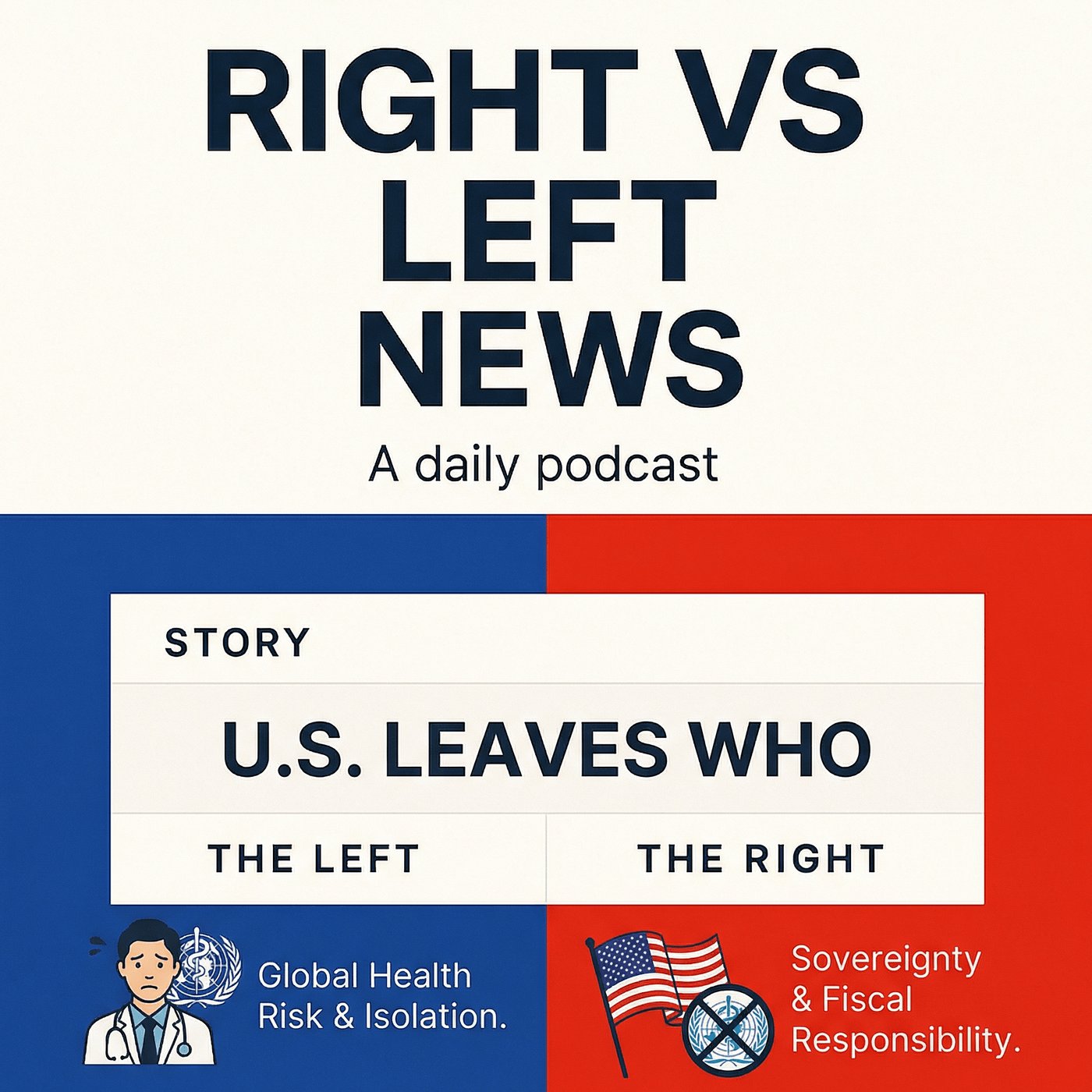
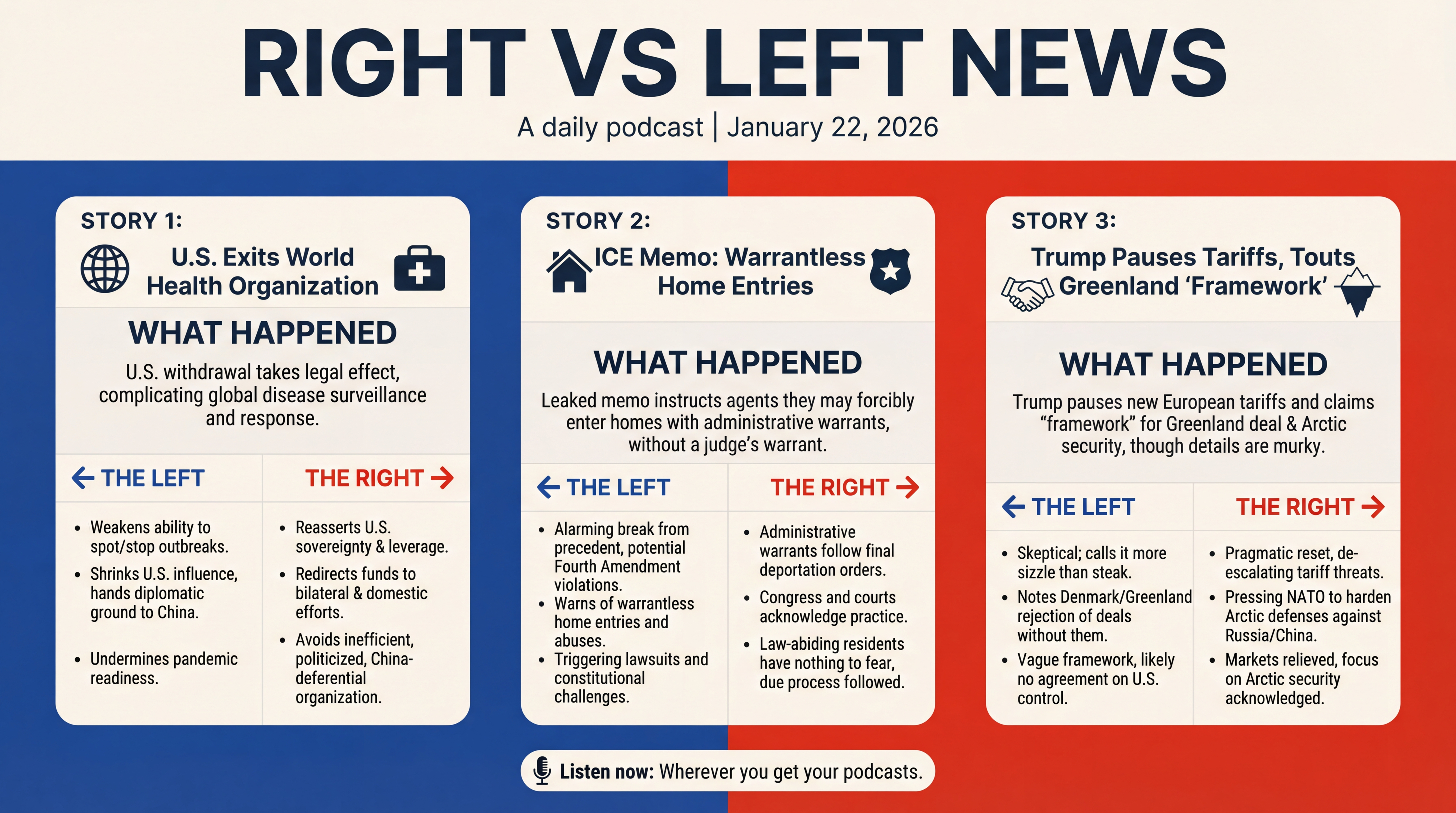
As of Thursday, January 22, 2026, the United States’ withdrawal from the World Health Organization took legal effect — one year after the United Nations confirmed receipt of Washington’s notice. The U.S. had been WHO’s largest funder, and critics say the exit complicates global disease surveillance and response. The WHO said it regretted the decision and urged continued partnership. Outlets including Reuters and Al Jazeera reported the effective date, and the WHO’s statement flagged the stakes.
On the right, the White House’s rationale is front and center — that WHO is inefficient, politicized, and too deferential to China. Exiting, they say, reasserts U.S. sovereignty and leverage, allowing funds to be redirected to bilateral health efforts or domestic preparedness. They point to the executive order and argue reforms didn’t go far enough.
On the left, critics warn the move weakens America’s ability to spot and stop outbreaks, shrinks U.S. influence in global health standards, and could hand diplomatic ground to Beijing. Time and researchers writing in Nature’s HSS Communications contend the exit undermines pandemic readiness and programs from TB to HIV.
Here’s what happened.
An internal ICE memo dated May 12, 2025, instructs agents they may forcibly enter a person’s home to arrest them using an administrative arrest warrant — Form I-205 — tied to a final removal order, without a judge-signed search warrant. DHS did not dispute the memo’s authenticity and says those targeted have had due process. Legal experts question its constitutionality under the Fourth Amendment, and court challenges are likely.
On the right, supporters emphasize that administrative warrants follow final deportation orders, and that Congress and the courts have long acknowledged administrative warrants in immigration enforcement. They argue law-abiding residents have nothing to fear, and say DHS’s due process point is key.
On the left, civil-liberties groups and immigrant-rights advocates call it an alarming break from precedent — warning of warrantless home entries and potential abuses. They frame the policy as likely to collide with the Fourth Amendment and to trigger lawsuits.
Here’s what happened.
At the World Economic Forum in Davos, President Trump said he’s pausing new tariffs on several European allies after meeting with NATO’s Mark Rutte, and claimed a “framework of a future deal” on Greenland and broader Arctic security. He also said he won’t use force to acquire Greenland. Denmark and Greenland quickly stressed their sovereignty, and details remain... murky. Coverage from Fox News, CBS News, Time, and the Guardian tracked the shifting announcements.
On the right, conservative outlets highlight a pragmatic reset — de-escalating tariff threats while pressing NATO to harden Arctic defenses against Russia and China. Markets seemed relieved by the tariff pause, and NATO officials acknowledged a renewed focus on Arctic security.
On the left, progressive coverage is skeptical — calling it more sizzle than steak, and noting Copenhagen and Nuuk have rejected any deal over Greenland’s status without them. The “framework” is described as vague, with diplomatic sources seeing no agreement on U.S. control — only talk of expanded bases and security coordination.
[MIDPOINT_SPONSORS]
Here’s what happened.
Lafayette Square, the historic park just north of the White House, is fenced off as renovation work begins — new sodding, restored fountains, benches, and safer walkways — part of a wider push to spruce up D.C. ahead of America’s 250th birthday. Critics say the administration has skirted normal oversight in other projects, while the National Park Service highlights citywide fountain repairs, including in Lafayette Square.
On the right, supporters cast it as overdue beautification and public-safety work that will welcome millions of visitors in 2026 — a straightforward effort to make the capital safe and beautiful.
On the left, preservationists and many local voices worry about precedent, arguing rapid changes around the White House have outpaced independent reviews. Watchdog lawsuits question whether key checks were bypassed.
Here’s what happened.
A group of Democratic senators warns that the Education Department’s move to end the Biden-era SAVE repayment plan could raise monthly costs and disrupt Public Service Loan Forgiveness for millions. The Department announced a proposed settlement with Missouri to wind down SAVE and shift borrowers to other plans. Consumer advocates say processing delays and higher bills may follow.
On the right, fiscal hawks argue SAVE was unlawful and too costly, preferring to steer borrowers into existing, congressionally authorized plans while designing a new, sustainable option. The Department frames the change as restoring the rule of law and ending open-ended subsidies.
On the left, progressives warn of payment shocks, backlogs, and lost PSLF credits if borrowers are herded into pricier plans or default during the transition. Analysts predict months of chaos as systems adjust.
Quick recap... The U.S. is out of the WHO; a leaked ICE memo ignites a constitutional fight; in Davos, Trump pauses tariffs and touts a Greenland “framework”; Lafayette Square gets a facelift amid oversight worries; and ending SAVE could reverberate through student-loan and PSLF households. We’ll keep tracking what changes — and what doesn’t — as these stories evolve.
That's it for today's episode of Right versus Left News. Remember, understanding both sides isn't about picking a team—it's about being informed. Subscribe wherever you get your podcasts, and join us tomorrow for another balanced look at the day's biggest stories. Until next time, stay curious and stay informed.
