Crypto Rulebook, Shower Flow, and Winter Storms
Senators unveil a sweeping crypto framework as the House loosens showerhead rules, while inflation cools, Google fights a publisher lawsuit, and Gaza faces deadly winter storms. We break down the stakes — and how the left and the right frame each story.
Episode Infographic
Show Notes
Welcome to Right versus Left News—your daily briefing on the stories that matter, told from both sides of the aisle. I'm your AI host - Chris, and each day I bring you the most important political and cultural news, with perspectives from conservative and progressive voices. No spin, no agenda—just the facts and the opinions that shape our national conversation. Let's dive in...
Here's what we're watching today, Wednesday, January 14, 2026.
Senators roll out a long-awaited crypto framework that could remake digital asset regulation... the House passes the SHOWER Act to loosen federal limits on showerhead water flow... new inflation data shows prices rising 2.7% year over year in December... Google moves to toss a publisher lawsuit over its AI search summaries... and in Gaza, winter storms turn lethal as Hamas moves toward choosing a new leader.
Let's dig in.
[BEGINNING_SPONSORS]
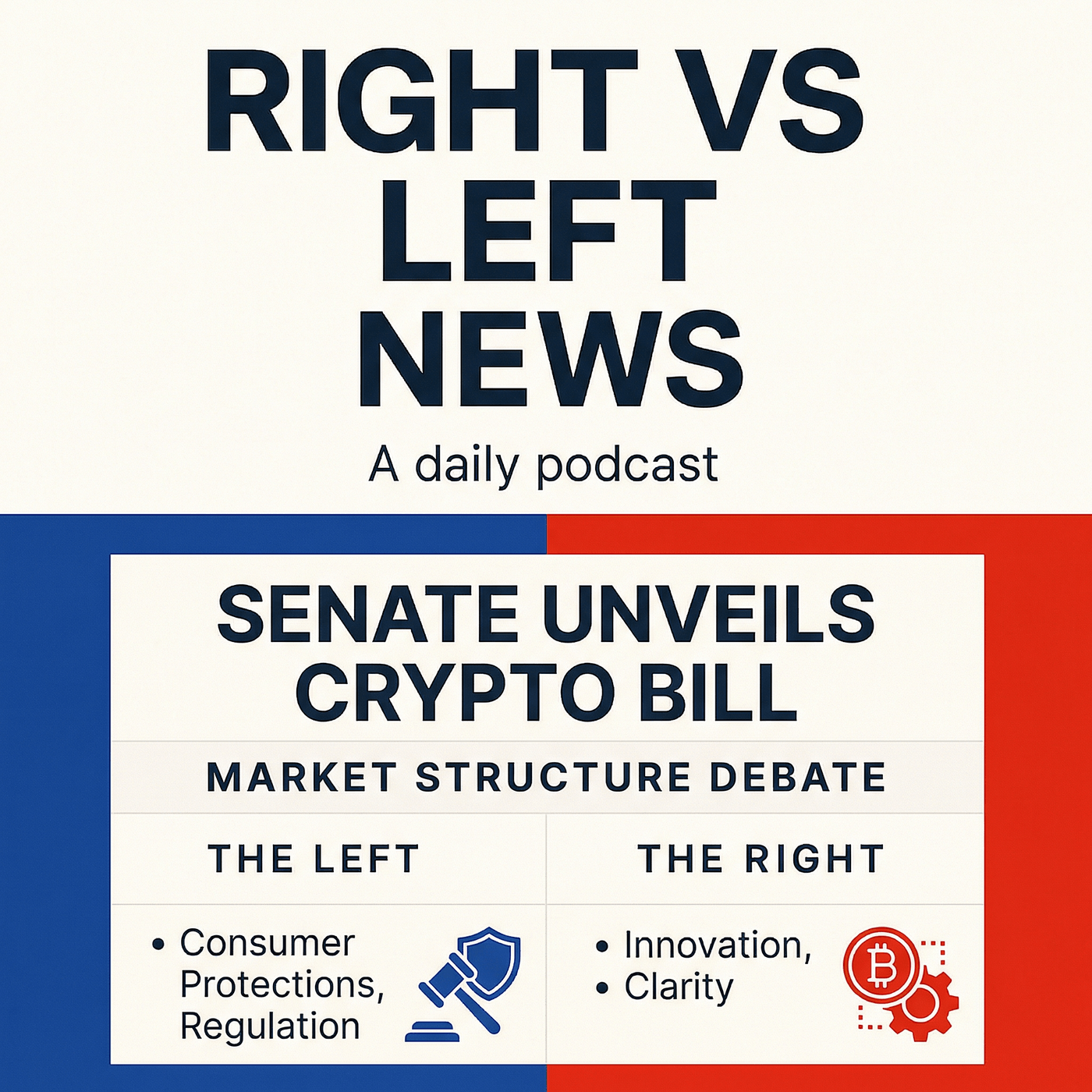
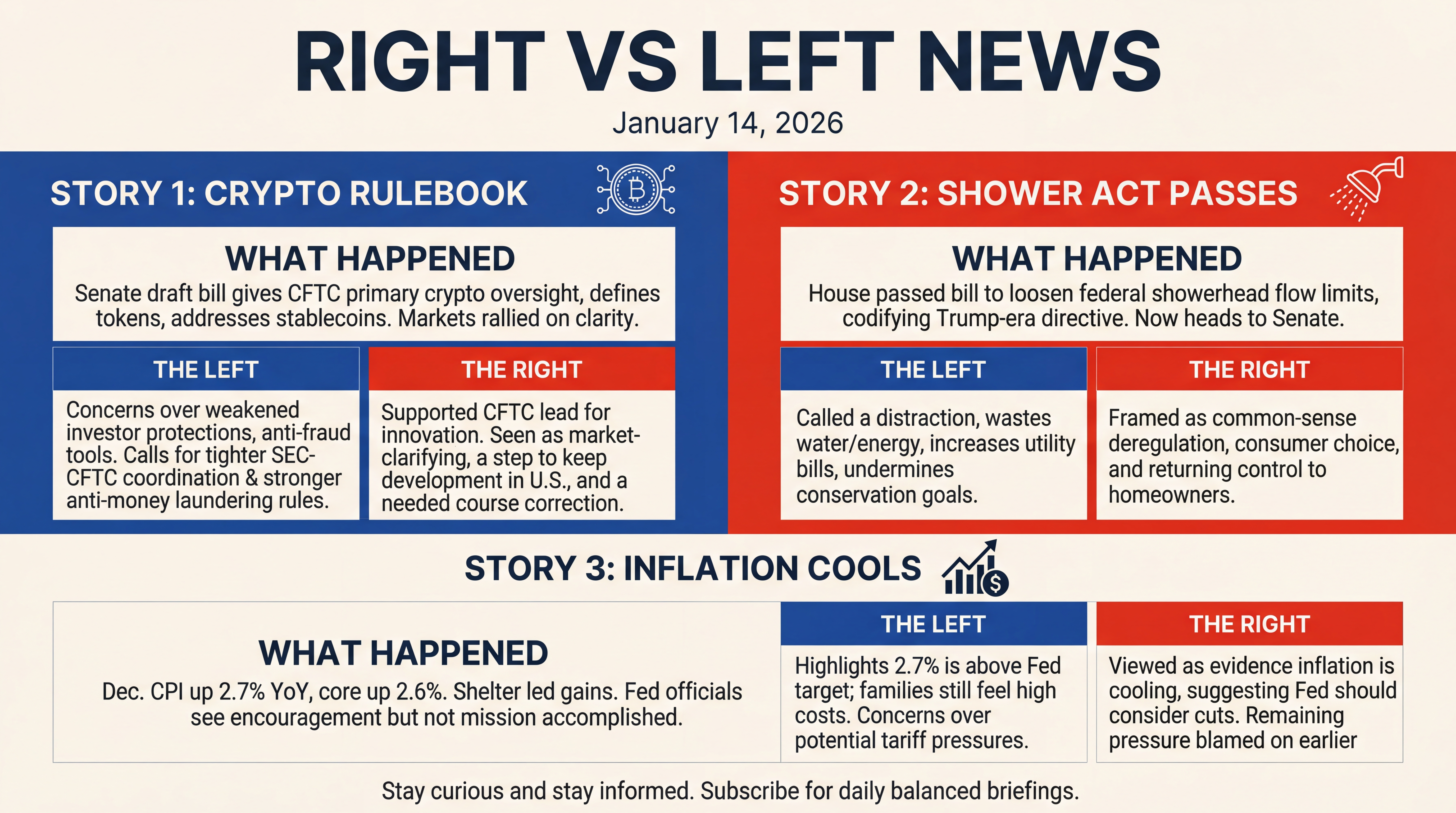
U.S. senators unveiled a draft crypto market structure bill. It would define when tokens are treated as securities versus commodities — and give the Commodity Futures Trading Commission primary oversight of spot crypto markets. The proposal also addresses stablecoins by barring interest paid simply for holding a stablecoin, while allowing rewards tied to payments or loyalty programs. Markets liked the clarity; crypto prices ticked up on the news, according to Reuters and Barron's.
On the right, many conservatives have long argued the CFTC — not the SEC — should take the lead, saying innovation needs a lighter, commodities-style regime. Business-friendly outlets call the bill market-clarifying and a step toward keeping development in the U.S. Newsmax frames the CFTC shift as a course correction after years of ambiguity.
On the left, progressive policy voices warn that privileging the CFTC could weaken investor protections and anti-fraud tools. Analysts at outlets like MSNBC opinion pages and think tanks say earlier crypto bills leaned too industry-friendly; Brookings has pushed for tighter SEC–CFTC coordination to prevent regulatory arbitrage. Expect calls for stronger anti–money laundering rules and clearer consumer disclosures as the Senate edits the draft.
The House passed the SHOWER Act — Saving Homeowners from Overregulation With Exceptional Rinsing. It would codify a Trump-era directive that loosened the federal definition of showerhead, effectively allowing higher water flow from multi-nozzle fixtures. The vote was 226 to 197, with 11 Democrats joining Republicans. The bill now heads to the Senate, per the Associated Press and Congress.gov.
Republicans frame it as common-sense deregulation and consumer choice. Fox News emphasizes returning control to homeowners — and pushing back on what supporters view as bureaucratic overreach in daily life.
Democrats and environmental groups call it a distraction that wastes water and energy — raising utility bills and undermining conservation — while more urgent cost-of-living issues wait. The Washington Post and the NRDC note that prior rollbacks increased overall water use and clashed with efficiency goals.
December Consumer Price Index data show headline inflation up 0.3% on the month, and 2.7% year over year. Core prices rose 2.6% from a year ago. Shelter led the monthly gains; food prices also climbed. The Bureau of Labor Statistics released the report Tuesday, and Fed officials called the trend encouraging — but not yet mission accomplished.
On the right, the data are cited as evidence inflation is cooling — and that the Fed should consider cuts. Market commentary echoes that view, while also blaming remaining price pressure on earlier policy choices and tariffs.
On the left, progressives note that 2.7% still exceeds the Fed's target — and that families still feel high costs for rent and groceries. The Guardian underscores that cost-of-living pain remains elevated and warns that tariff and trade uncertainty could add pressure. Expect continued pushes for corporate pricing scrutiny and targeted relief.
[MIDPOINT_SPONSORS]
Google asked a federal judge in Washington, D.C., to dismiss a lawsuit from Penske Media — publisher of Rolling Stone, Billboard, and Variety — over AI-generated search summaries. Penske alleges the AI overviews siphon traffic and ad revenue, leveraging Google’s dominance to coerce participation. Google says the summaries are part of Search, link to sources, and that publishers can opt out of indexing if they choose, according to Reuters.
Conservative-leaning, pro-market voices warn against sweeping antitrust remedies that could chill innovation. They argue new AI features are part of healthy competition across search and chat — and that publishers need to adapt their business models. Business and tech press note continuing legal headwinds for Google, while cautioning against regulatory overreach.
Progressive outlets and many media analysts focus on the threat to journalism’s business model — arguing that zero-click answers starve newsrooms and warrant stronger rules or revenue sharing. Reporting highlights sizable traffic drops tied to AI summaries — and broader fears that the traffic era for publishers may be ending.
Severe winter storms in Gaza collapsed walls and flooded tent camps, killing at least six people, including a one-year-old, amid a dire shelter shortage. Meanwhile, Hamas is moving to elect a new leader to replace Yahya Sinwar, with reported contenders including Khalil al-Hayya and Khaled Meshaal. Aid groups warn of high flooding risk across hundreds of sites, according to Reuters and the Associated Press.
On the right, commentary emphasizes Israel’s security needs and Hamas’s culpability — arguing leadership changes don’t alter Hamas’s ideology, and that aid distribution must not strengthen militants. Coverage often stresses enforcing conditions on reconstruction and scrutinizing U.N. agencies operating in Gaza.
On the left, progressive voices spotlight the humanitarian emergency — calling for more unfettered aid, durable cease-fire terms, and accountability for civilian harm. Reporting highlights shelter shortages, winter risks, and the need for expanded access so families aren’t rebuilding tents after every storm.
Recap: Senators put a crypto rulebook on the table... the House votes to make showers great again... inflation cools but not to the Fed’s target... Google’s AI search faces a pivotal legal test... and Gaza’s winter turns deadly as Hamas reshuffles its leadership. We’ll keep tracking what moves next — and how both the right and the left are framing it.
That's it for today's episode of Right versus Left News. Remember, understanding both sides isn't about picking a team—it's about being informed. Subscribe wherever you get your podcasts, and join us tomorrow for another balanced look at the day's biggest stories. Until next time, stay curious and stay informed.
