Fragile Truce, Tight Elections, Power on Trial
From Gaza diplomacy on a knife’s edge to Hong Kong’s tightly managed vote, a D.C. bail clash, a Supreme Court test of agency independence, and a politicized Kennedy Center Honors — we break down the stakes and how both sides see them. Clear context and fast analysis, in one concise briefing.
Episode Infographic
Show Notes
Welcome to Right versus Left News—your daily briefing on the stories that matter, told from both sides of the aisle. I'm your AI host - Chris, and each day I bring you the most important political and cultural news, with perspectives from conservative and progressive voices. No spin, no agenda—just the facts and the opinions that shape our national conversation. Let's dive in...
We’ve got a lot to unpack today.
Gaza truce talks are teetering at a critical moment… Hong Kong is voting under China’s tightened rules just days after a catastrophic fire… the House passed a sweeping bill to bring cash bail back to Washington, D.C.… the Supreme Court is poised to test decades of precedent on presidential power over independent agencies… and the Kennedy Center Honors weekend turned into a political Rorschach test, with record fundraising and new controversy.
Mediators say the Gaza talks are delicate. In Hong Kong, turnout and press pressure are major storylines. In D.C., the bail bill now heads to a skeptical Senate. And legal analysts say the Court’s next case could reshape the administrative state. We’ll break down what happened — and what the right and left are saying.
[BEGINNING_SPONSORS]
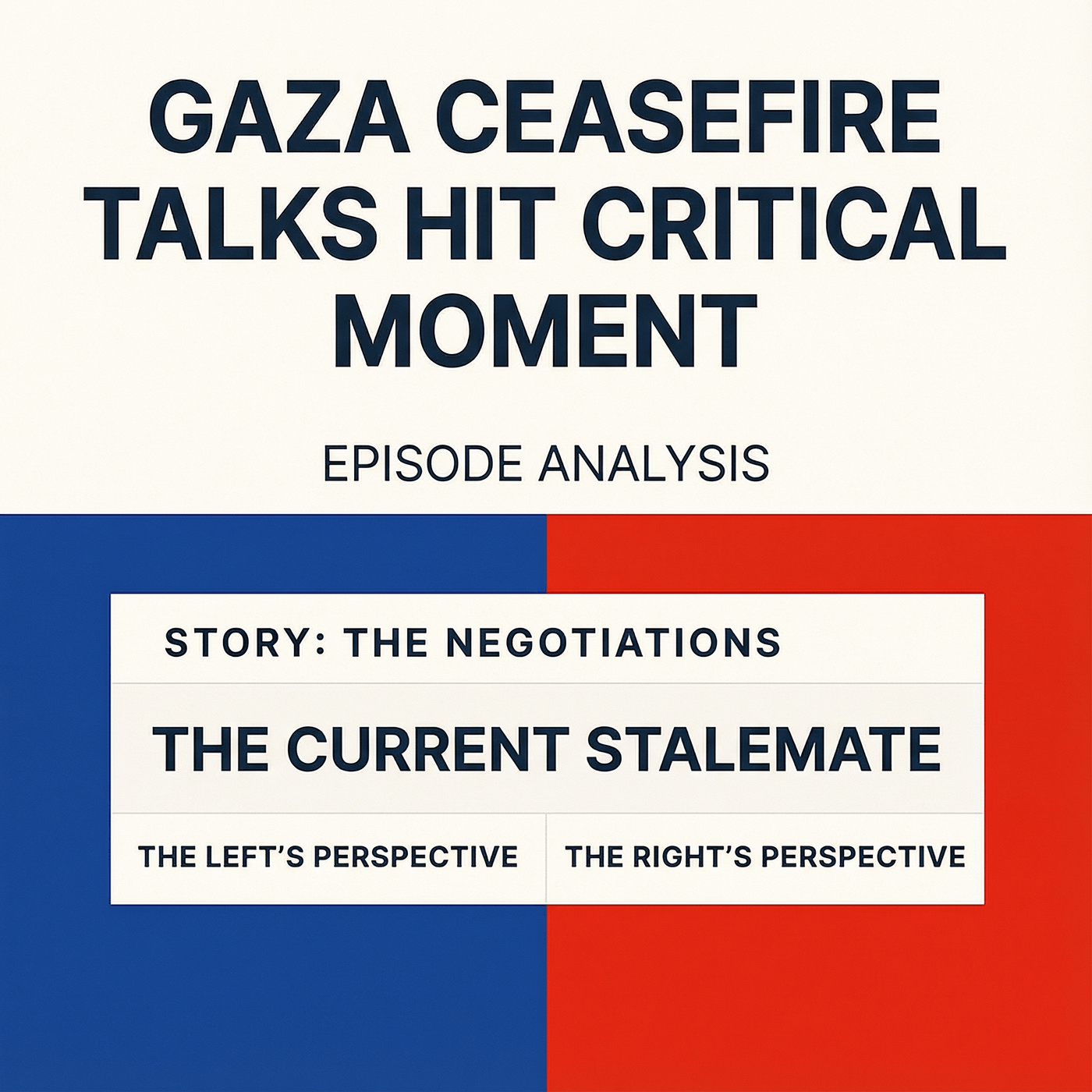
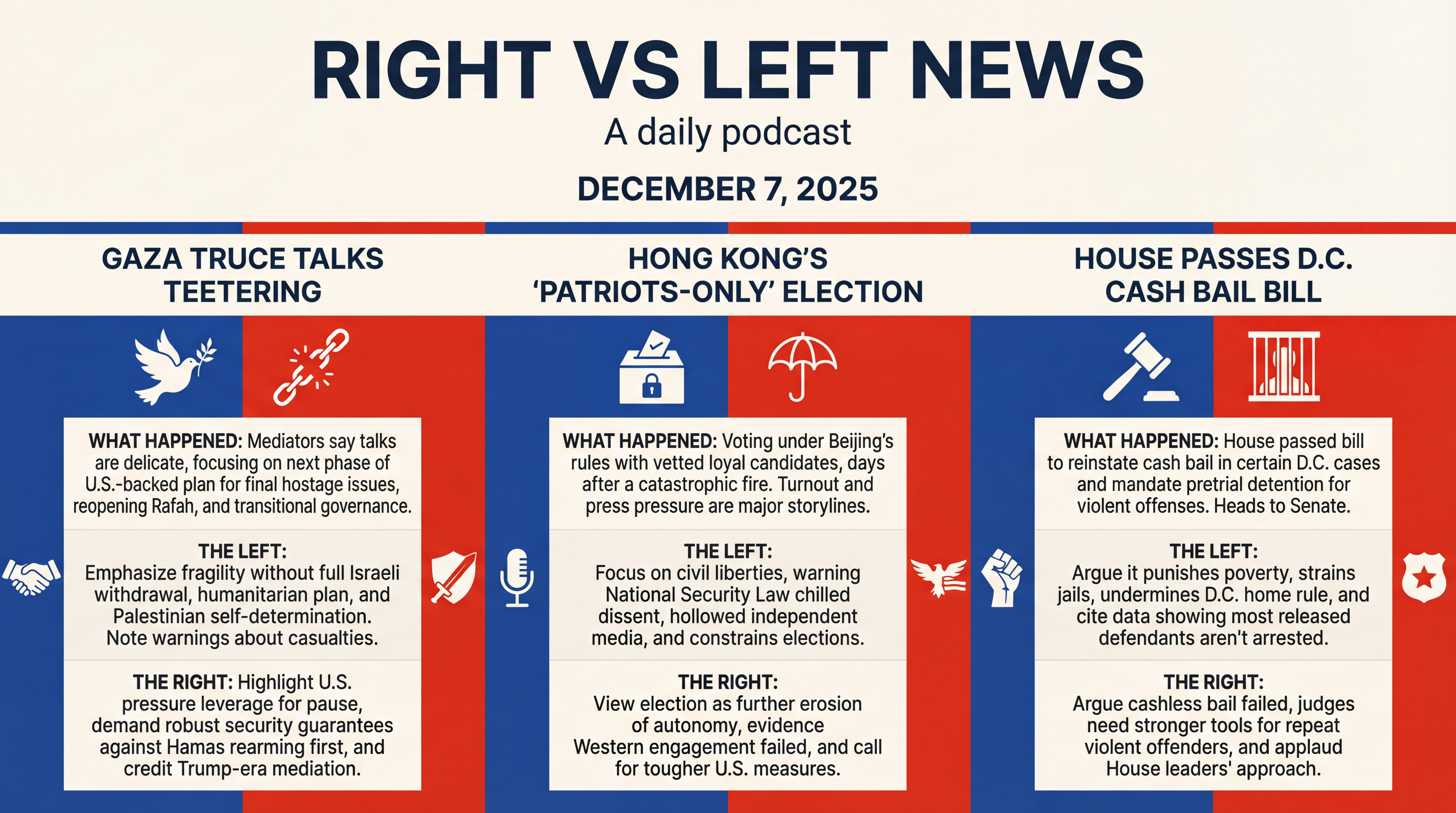
Gaza truce negotiations are at a critical moment, Qatar’s prime minister said at the Doha Forum. He cautioned that the current pause isn’t a full ceasefire until Israeli forces withdraw, and normal life resumes. Talks are centering on the next phase of a U.S.-backed plan — final hostage issues, reopening Rafah, and a transitional governance and security arrangement. Turkey’s foreign minister added that credible civil administration and policing must come before any disarmament.
On the right, commentators emphasize that the pause and hostage releases reflect leverage from U.S. pressure, and that any second phase must ensure Hamas can’t rearm — robust security guarantees first, political steps later. They highlight Turkey’s push with caution, arguing Israel’s security concerns should limit who joins any international force, and they credit Trump-era mediation for movement so far.
On the left, progressive voices stress that without a full Israeli withdrawal, freedom of movement, and a clear humanitarian plan, this remains fragile — more pause than peace. They note warnings about casualties during the truce, and argue any durable deal must include a pathway to Palestinian self-determination, with real oversight over any new governing board or security force.
In Hong Kong, Legislative Council elections are taking place under Beijing’s patriots-only rules. Only 20 of 90 seats are directly elected — and all candidates are vetted for loyalty. The vote arrives less than two weeks after the deadly Tai Po apartment-block fire that killed at least 159 people. Authorities have warned foreign media not to smear relief efforts, and turnout is being closely watched after a record-low 30 percent in 2021.
On the right, conservative and hawkish China watchers see the election as further erosion of Hong Kong’s autonomy — evidence, they argue, that years of Western engagement didn’t restrain Beijing. Some call for tougher U.S. and allied measures, from targeted sanctions to recalibrating financial exposure to the territory.
On the left, human-rights groups and many liberal commentators focus on civil liberties — warning that the National Security Law has chilled dissent, hollowed out independent media and civil society, and now constrains elections. They also criticize pressure on foreign outlets in the fire’s aftermath, and view this vote as confirmation of shrinking freedoms.
Back in the U.S., the House passed a Republican bill to overhaul Washington, D.C.’s bail system — reinstating cash bail in certain cases and mandating pretrial detention for a wide range of violent or dangerous offenses. Supporters say it will curb crime, while critics warn it could swell the jail population and undercut three decades of risk-based release. The measure faces uncertain prospects in the Senate.
On the right, conservatives argue cashless bail has failed, pointing to high-profile cases and asserting that judges need stronger tools to keep repeat, violent offenders off the streets. They note the White House has pressured the District on crime, and applaud House leaders for backing that approach.
On the left, progressives cite D.C. data showing roughly 90 percent of released defendants aren’t arrested pretrial — and only a small fraction for violent offenses — arguing that reinstating cash bail punishes poverty, strains an already troubled jail, and undermines D.C. home rule. They contend the bill is more about federal control over a Democratic city than public safety.
[MIDPOINT_SPONSORS]
The Supreme Court will hear a case that could upend a 90-year precedent — Humphrey’s Executor — which limits a president’s ability to fire leaders of independent agencies without cause. The immediate dispute stems from President Trump’s firing of FTC commissioner Rebecca Slaughter. The broader questions include whether to scrap those tenure protections, and how courts should remedy illegal removals.
On the right, many back a unitary-executive view — that the Constitution vests executive power in the president, who must be able to remove principal officers for accountability. Legal groups have urged the justices to overturn Humphrey’s Executor, casting today’s independent agencies as powerful executive actors that shouldn’t be insulated from electoral control.
On the left, liberals warn that tearing down these protections would politicize regulators, destabilize markets, and erode checks and balances — especially at consumer and labor agencies. They note the Court has already been willing to sidestep precedent in other contexts, and emphasize that any ruling could reshape the administrative state well beyond the FTC.
The Kennedy Center Honors weekend brought culture and politics into the same frame. President Trump hosted the medal ceremony in the Oval Office — a first — and touted renovations and a new direction for the nation’s arts center. A record $23 million fundraising haul accompanied the Honors, while critics pointed to concerns over politicization, staff upheaval, and sagging ticket sales for programming this year.
On the right, conservatives hail the fundraising record, the star power of honorees like George Strait and Sylvester Stallone, and the White House spotlight on American cultural icons — arguing the institution is thriving and reaching new donors. They frame Trump’s hands-on role as energetic stewardship.
On the left, progressives argue the president’s deep involvement has politicized a traditionally nonpartisan institution and alienated parts of the arts community. They point to leadership changes, resignations, and programming shifts they say favor ideology over breadth — seeing the Honors’ makeover as emblematic of culture-war governance.
Gaza diplomacy is on a knife’s edge… Hong Kong’s election underscores Beijing’s tightening grip… the House’s D.C. bail bill sets up a Senate fight and a debate over crime and poverty… the Supreme Court is eyeing a precedent that could transform agency independence… and even the arts are part of today’s political story.
We’ll keep tracking each thread as it develops.
That's it for today's episode of Right versus Left News. Remember, understanding both sides isn't about picking a team—it's about being informed. Subscribe wherever you get your podcasts, and join us tomorrow for another balanced look at the day's biggest stories. Until next time, stay curious and stay informed.