Courts, Conflict, and a Streaming Shakeup
From the Supreme Court’s birthright citizenship case to a CDC vaccine shift, Russia’s mass strikes, new Google antitrust remedies, and Netflix’s bid for Warner Bros. and HBO — here’s what happened and why it matters. Clear context, balanced perspectives, and what to watch next.
Episode Infographic
Show Notes
Welcome to Right versus Left News—your daily briefing on the stories that matter, told from both sides of the aisle. I'm your AI host - Chris, and each day I bring you the most important political and cultural news, with perspectives from conservative and progressive voices. No spin, no agenda—just the facts and the opinions that shape our national conversation. Let's dive in...
Today we’re tracking five big stories: the Supreme Court has agreed to hear a challenge to President Trump’s order restricting birthright citizenship... a CDC advisory panel is narrowing its hepatitis B guidance for newborns... Russia has unleashed one of its largest aerial attacks of the war against Ukraine... a federal judge is tightening remedies in the Google antitrust case... and Netflix is moving to buy Warner Bros.’ studio and HBO in a blockbuster deal that could reshape streaming. Let’s dive in.
[BEGINNING_SPONSORS]
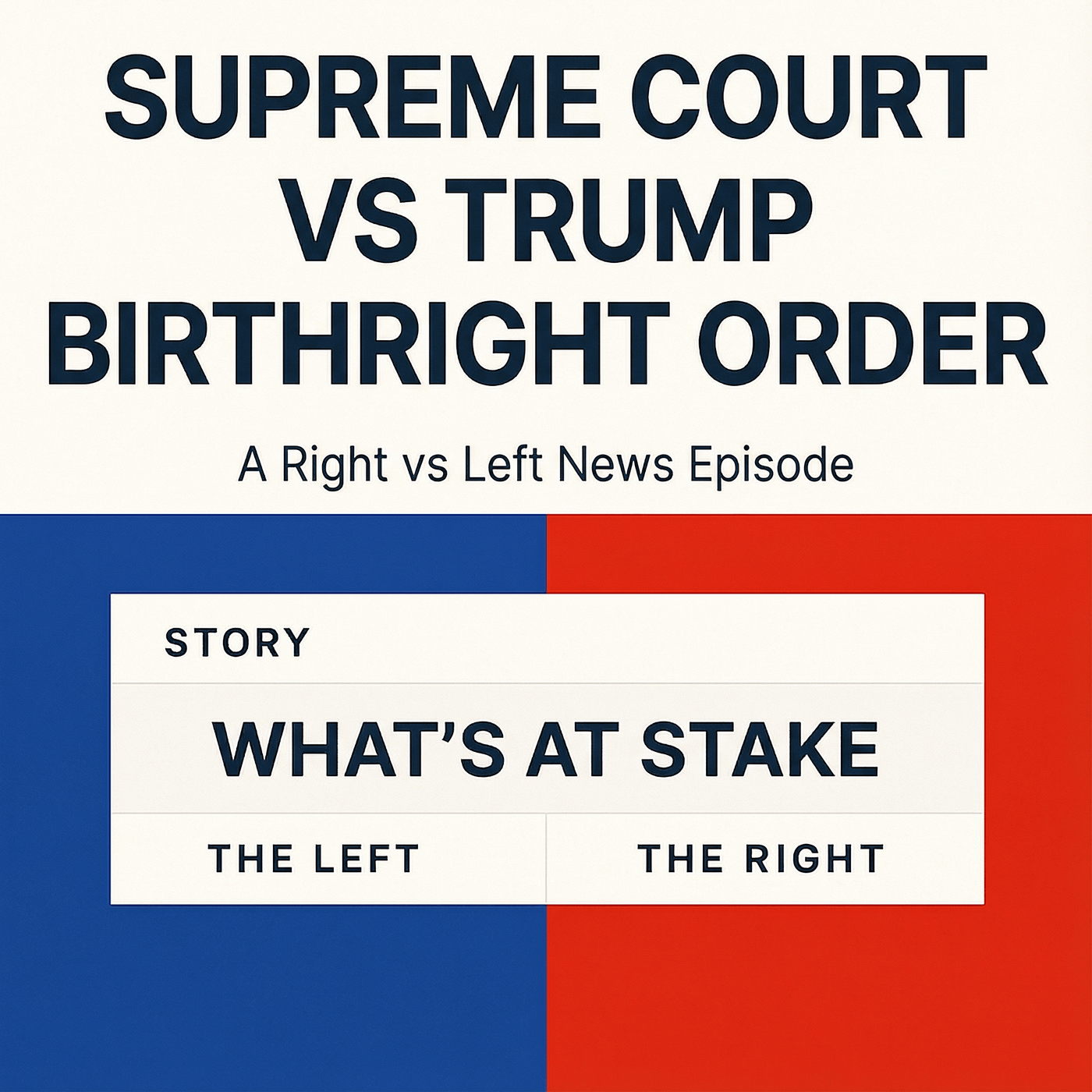
First up, here’s what happened... The Supreme Court said it will review President Trump’s executive order directing federal agencies not to recognize U.S. citizenship for babies born here if neither parent is a citizen or a lawful permanent resident.
Lower courts blocked the policy, citing the Fourteenth Amendment and long-standing precedent — like Wong Kim Ark. The case comes from New Hampshire, will be argued in the spring, and could be decided by early summer. Until then, the order remains on hold. That’s according to reporting from the Associated Press and Reuters.
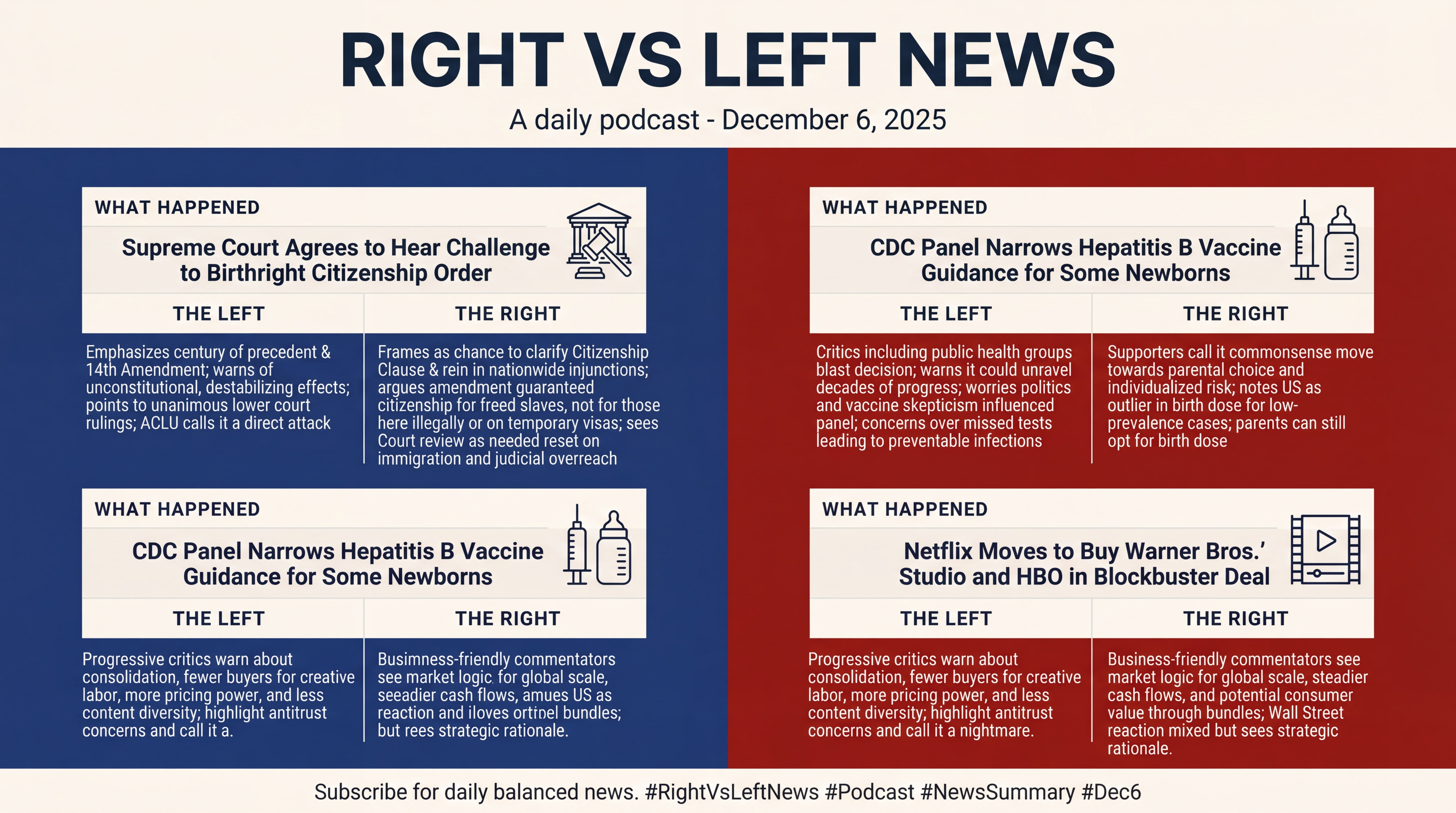
On the right, the case is framed as a chance to clarify the Citizenship Clause and rein in nationwide injunctions that, in conservatives’ view, have let single judges freeze national policy. Supporters argue the amendment was meant to guarantee citizenship for freed slaves and their children — not to cover children of those here illegally or on temporary visas. They see the Court’s review as a needed reset on both immigration and judicial overreach.
On the left, outlets and civil-liberties groups emphasize that for more than a century, being born on U.S. soil has conferred citizenship. They warn that changing that by executive order would be unconstitutional and destabilizing for families. They point to the unanimity of lower-court rulings against the policy, and say the stakes include millions of Americans’ legal status and equal-protection principles. The ACLU is leading the class action, and calls the order a direct attack on the Fourteenth Amendment.
Staying with health and policy...
Here’s what happened... A CDC advisory panel — known as ACIP — voted eight to three to end the blanket recommendation that all newborns receive a hepatitis B shot at birth when the mother tests negative for the virus. Instead, the committee endorsed shared decision-making between parents and doctors, suggesting the first dose no earlier than two months in those cases. The birth-dose recommendation still stands for infants whose mothers are hepatitis B positive, or whose status is unknown. The change isn’t final until it’s adopted by the CDC’s acting director. That’s based on CDC statements and major news outlets.
Supporters say the shift is a commonsense move toward parental choice, individualized risk assessment, and fewer one-size-fits-all mandates. They also note the CDC’s point that the United States has been an outlier among low-prevalence countries in automatically giving a birth dose to babies of mothers who test negative. Importantly, parents can still opt for the birth dose, and insurance coverage remains in place.
Critics — including public-health groups and many medical experts — blasted the decision. The American Public Health Association warns it could unravel decades of progress and leave infants vulnerable, while the American Association of Immunologists is urging CDC leadership to reject the change. They worry politics and vaccine skepticism influenced the panel’s makeup, and that missed tests or checkups could lead to preventable infections. CDC leadership still has to sign off.
Meanwhile, in Europe...
Here’s what happened... Overnight into Saturday, Russia launched an enormous barrage — hundreds of drones and more than fifty missiles — hitting rail and energy infrastructure across Ukraine. Ukraine says it intercepted the vast majority, but still reported damage in multiple regions. A railway hub near Kyiv was struck, disrupting service. Poland scrambled jets as a precaution, though Warsaw said its airspace wasn’t violated. That’s from the Associated Press and Reuters.
On the right, coverage focuses on deterrence — NATO readiness, faster air-defense resupply, and clear signaling that spillover won’t be tolerated. Some voices argue Europe should shoulder more of the burden, and that U.S. support should be tied to a credible path to end the war on terms that deter future Russian aggression.
On the left, commentary spotlights the humanitarian toll and the risk of escalation. They stress protecting civilians and critical infrastructure, while urging serious diplomacy — warning that tit-for-tat drone wars risk normalizing strikes on energy grids through winter. Any peace framework, they argue, must center Ukrainian sovereignty and civilian protection. Reporting also notes nationwide power restrictions after repeated waves of strikes.
[MIDPOINT_SPONSORS]
Back to tech and the courts...
Here’s what happened... In the long-running Google search monopoly case, a federal judge ordered that Google’s default-placement contracts — for search or AI apps — can run no longer than one year. That means Apple, Samsung, and others must have a yearly shot to rebid those lucrative deals. The order builds on a prior ruling that barred exclusivity and required some data sharing with rivals. The one-year cap is meant to keep the market contestable. Google plans to appeal elements of the case.
On the right, free-market and libertarian voices argue the court was right to avoid a breakup and to tailor remedies narrowly — no heavy-handed bans on payments, no forced divestiture of Chrome or Android — while curbing the most anti-competitive tactics. Analysts praise caution against over-correction in a fast-changing market shaped by generative AI.
On the left, many say the penalties still don’t go far enough. Critics call the remedies a slap on the wrist that leaves Google’s dominance largely intact, even with time-limited contracts and some data sharing. They argue stronger structural steps — or at least tougher behavioral rules — are needed to open space for real competition.
And finally, media and streaming...
Here’s what happened... Netflix announced a deal to acquire Warner Bros.’ studio and streaming assets — including HBO and HBO Max — in a cash-and-stock transaction valuing the equity at about seventy-two billion dollars, or roughly eighty-two point seven billion including debt. Regulators still need to sign off, and the deal is expected to close twelve to eighteen months after Warner completes a planned spinoff of its global networks business. Financing includes a large bridge loan, with plans to refinance through bonds and new credit facilities. That’s from Netflix’s announcement and major outlets.
Business-friendly commentators see market logic — scale to compete globally, steadier cash flows, and potential consumer value through bundles — provided regulators allow the deal with conditions. Wall Street’s reaction is mixed, balancing concerns about debt and price against the strategic rationale.
Progressive critics warn about consolidation — fewer buyers for creative labor, more pricing power over subscribers, and less diversity of content. They highlight antitrust concerns and quote lawmakers calling it an antitrust nightmare, while industry voices worry about theaters, artists, and competition.
Here’s a quick recap... The Supreme Court puts birthright citizenship on the docket, a CDC panel narrows hepatitis B guidance for some newborns, Russia’s mass strikes test Ukraine’s defenses and NATO’s nerves, a judge forces annual rebids on Google’s default search deals, and Netflix’s bid for Warner Bros. and HBO sets up a regulatory showdown. We’ll keep watching as these stories evolve in the days ahead.
That's it for today's episode of Right versus Left News. Remember, understanding both sides isn't about picking a team—it's about being informed. Subscribe wherever you get your podcasts, and join us tomorrow for another balanced look at the day's biggest stories. Until next time, stay curious and stay informed.